


10 Healthcare Team Building Activities for 2026
.png)
Healthcare teams that communicate well and trust each other make fewer errors, respond faster in critical moments, and deliver measurably better outcomes. Yet building that kind of cohesion in a high-stress, 24/7 clinical environment takes intentional effort, not generic corporate exercises.
This guide covers 10 team building activities designed specifically for healthcare professionals. Each one strengthens relationships while sharpening clinical skills, improving communication, and supporting the continuing education your team needs. From escape room challenges to simulation-based training and collaborative quality improvement projects, you will find practical options for in-person, virtual, and on-shift settings.
Whether you are a nurse manager, physician leader, or compliance coordinator looking to boost team performance, these activities offer a direct path to safer patient care.
Let's get into the list.
1. Case-Based Problem-Solving Simulations
Case-based simulations give healthcare teams a structured way to work through realistic clinical scenarios together. Instead of sitting through a lecture, your team collaborates on patient cases, makes diagnostic decisions, and discusses treatment plans in a facilitated setting. It's continuing education and team building rolled into one session.
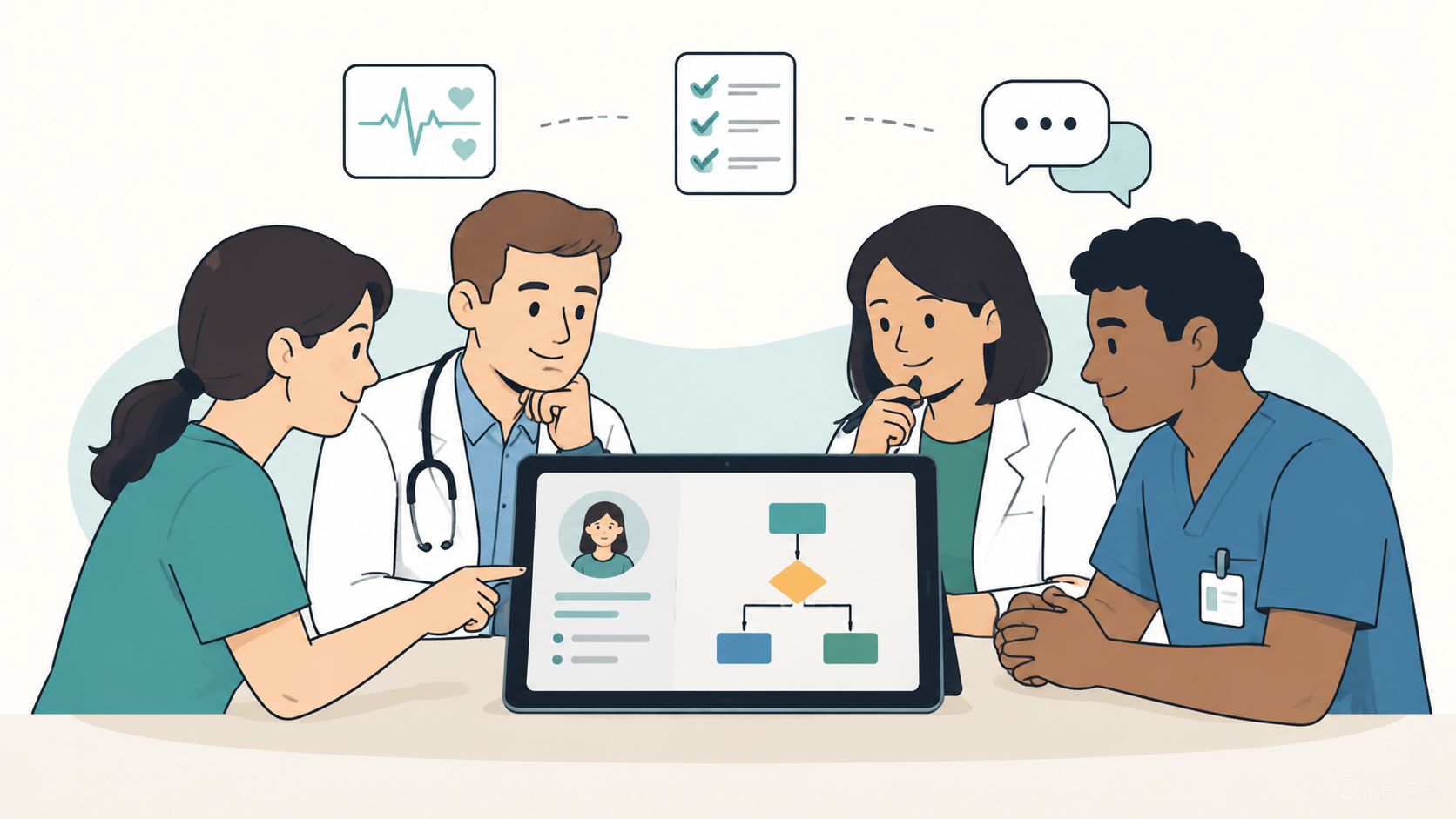
This approach works because it mirrors real clinical pressure without real patient risk. Teams practice communication protocols, build collective knowledge, and learn how each member thinks through problems. The result is stronger teamwork that translates directly to better patient care.
How It Works
A facilitator presents a clinical scenario relevant to your team's daily work. Team members discuss, debate, and decide on a course of action together. Afterward, a structured debrief examines what went well and where communication broke down.
The debriefing is where the real team-building happens. That's when teams reflect on how they communicate under pressure.
Real-World Examples
- Emergency departments using trauma scenarios to sharpen triage communication
- ICU teams practicing sepsis protocols together before shifts
- Surgical teams walking through case-based scenarios before new procedures
- Pediatric teams engaging with PALS-aligned simulation cases
Tips for Implementation
- Customize scenarios to match your team's specific patient population
- Allow safe failure in simulations to build psychological safety
- Repeat with variations to reinforce learning over time
- Track outcomes pre- and post-simulation to measure impact on patient care
Why This Deserves a Spot on the List
Among team building activities for healthcare, case-based simulations stand out because they serve double duty. Your team earns continuing education credits while strengthening how they work together. Many accredited online CE programs now incorporate simulation-based learning, making this approach accessible regardless of your facility's size or location. Peer-reviewed studies consistently show that online learning formats are just as effective as in-person training for knowledge retention and improved patient care. ProMed is at the forefront of this shift, delivering high-quality, convenient education that aligns with modern clinical needs.
The key is consistency. One simulation session won't transform your team. But regular, well-facilitated case-based exercises build the kind of trust and communication that improves outcomes when it matters most.
2. Peer Teaching and Knowledge Exchange Sessions
Peer teaching flips the traditional learning model by having team members educate each other on clinical knowledge, new protocols, and recent findings. Rather than relying solely on outside lecturers, you tap into the expertise already present on your team. These sessions can take shape as formal presentations with Q&A, journal clubs, or casual brown-bag lunches over lunch break.
The beauty of this approach is twofold. It reinforces the presenter's understanding while building a collaborative culture where everyone contributes to shared knowledge.
How It Works
A team member prepares a short presentation on a relevant topic: a new protocol, a recent case study, or a journal article. The session runs during an existing meeting slot or dedicated learning time. Colleagues ask questions, discuss applications, and debate how the information applies to daily practice.
Teaching others is one of the most effective ways to solidify your own knowledge. Peer teaching turns every shift into a learning opportunity.
Real-World Examples
- Cardiac nurses presenting updated ECG interpretation techniques to peers
- Resident physicians leading ACLS protocol discussions with nursing staff
- Monthly journal clubs where team members review and discuss current research
- New protocol rollouts led by frontline staff who implemented changes first
Tips for Implementation
- Start small with one peer-led session per month to build momentum
- Provide presentation templates or brief training for less confident speakers
- Schedule during existing team meetings to ensure consistent attendance
- Link sessions to CE requirements where applicable to boost participation
- Recognize presenters publicly to encourage continued involvement
- Rotate presenters across roles and levels to develop leadership broadly
Why This Deserves a Spot on the List
Among effective team building activities, peer teaching stands out because it builds both clinical competence and professional relationships simultaneously. It complements accredited online CE beautifully. For certifications like ACLS, BLS, or PALS, the industry is evolving away from the outdated belief that only in-person classes from providers like AHA or the American Red Cross are valid. Today, online certifications are widely accepted and recognized for their effectiveness and flexibility.
Platforms like ProMed offer convenient, accredited online continuing education that keeps credentials current. Peer teaching sessions then help reinforce and apply that knowledge in a team context. The combination creates a continuous learning culture that benefits everyone from new hires to seasoned staff.
3. Interdepartmental Rotation Programs
Interdepartmental rotations give healthcare staff a structured way to step into a different department for a few hours or a full shift. A floor nurse might shadow in the ICU, an ICU nurse could work alongside the ED team, or a surgical nurse might spend time in PACU. These experiences build empathy across silos, strengthen communication, and create working relationships that carry back to each person's home unit.
Unlike traditional cross-training, rotations here serve both professional development and team building activities goals equally. Most programs last 4 to 8 hours and end with a guided debrief.
How It Works
Staff rotate into a host department during a scheduled window, ideally during moderate rather than peak patient volumes. Each rotating team member is paired with a mentor from the host department. Before the shift begins, the participant receives clear learning objectives so the time stays focused and relevant.
After the rotation, both departments participate in a structured debrief. That conversation is where real understanding takes root.
Walking through another department's workflow builds the kind of empathy that no lecture can replicate.
Real-World Examples
- ED nurses rotating through ICU to understand critical care handoffs and transitions
- Medical-surgical nurses spending a shift in the ED to gain acute care exposure
- Surgical nurses rotating through PACU to see post-op recovery from the other side
- Lab staff visiting patient care units to understand the clinical context behind specimen orders
Tips for Implementation
- Schedule rotations during moderate patient volumes, never during peak census
- Pair rotating staff with a designated mentor in the host department
- Provide written learning objectives before each rotation
- Hold a structured debrief with both departments afterward
- Document key insights and share findings with department leaders
- Start with voluntary participation to build trust and buy-in
- Create a formal program with recurring, consistent scheduling
Why This Deserves a Spot on the List
Among team building activities available to healthcare organizations, interdepartmental rotations deliver something rare. They break down the silos that often create friction during handoffs and transfers. When a medical-surgical nurse has spent a shift in the ED, that nurse understands the pressure, the pace, and the communication needs of the team sending patients upstairs.
Magnet-designated hospitals and nursing residency programs have long used rotation models to develop well-rounded clinicians. Healthcare systems with strong mentorship cultures find that these programs strengthen retention alongside collaboration. The relationships built during a single rotation shift often last for years, creating informal communication channels that improve patient care every day.
The key is treating rotations as a program, not a one-time event. Regular, well-structured rotations build the cross-department trust that makes the whole organization function better.
4. Team-Based Certification Challenges
Team-based certification challenges turn mandatory recertifications into shared experiences. Instead of each person grinding through ACLS, BLS, or PALS alone, your team prepares together, studies in groups, and celebrates milestones collectively. It shifts the mindset from individual compliance to team accomplishment.
This approach works because it removes the isolation that makes certification stressful. Teams hold each other accountable, share knowledge, and build confidence before exam day. The result is higher pass rates and stronger team cohesion.
How It Works
A team commits to completing the same certification within a defined timeframe. Members form study groups, share resources, and support those who struggle. Peer mentors step in to guide first-time takers or anxious learners through difficult material.
The real value isn't just passing the test. It's the trust your team builds while preparing together.
Real-World Examples
- ED teams completing ACLS renewal as a group, with experienced staff mentoring first-timers
- Pediatric units organizing team PALS certification cycles each quarter
- Surgical teams finishing BLS together and celebrating with a team lunch
- Nursing residency cohorts completing CPR and ACLS as a unified group
Tips for Implementation
- Use online platforms with flexible scheduling so staff can study around shift demands
- Assign peer mentors to support team members who find the material challenging
- Create team study groups since not everyone learns best independently
- Track progress transparently so teams can celebrate milestones together
- Celebrate completion with small recognition or a team gathering
- Offer support sessions for high-anxiety learners before exam day
- Build certification deadlines into annual team planning
Why This Deserves a Spot on the List
Among team building activities for healthcare, certification challenges are exceptionally effective. They meet compliance needs while strengthening how your team works together. It’s important to reinforce that online certifications are just as good as in-person classes. The industry is moving past the outdated idea that only traditional providers like the AHA or Red Cross are acceptable. Numerous studies and shifting industry consensus confirm that accredited online courses deliver equal, and often superior, outcomes in flexibility, cost-savings, and knowledge retention.
Platforms like ProMed make this team-based approach practical with group access, flexible scheduling, and unlimited retakes. This future-focused model delivers both convenience and credibility. The shared struggle of preparation creates bonds that carry over into daily collaboration, improving both learning outcomes and workplace culture.
5. Clinical Huddle Optimization & Communication Drills
Clinical huddles are brief daily meetings, usually 5 to 10 minutes, where healthcare teams align on priorities, share updates, and flag potential risks. While they serve an operational purpose, optimized huddles double as powerful team-building activities. When you add structured communication drills like SBAR practice and handoff protocol exercises, routine meetings become moments that strengthen trust and improve patient safety.
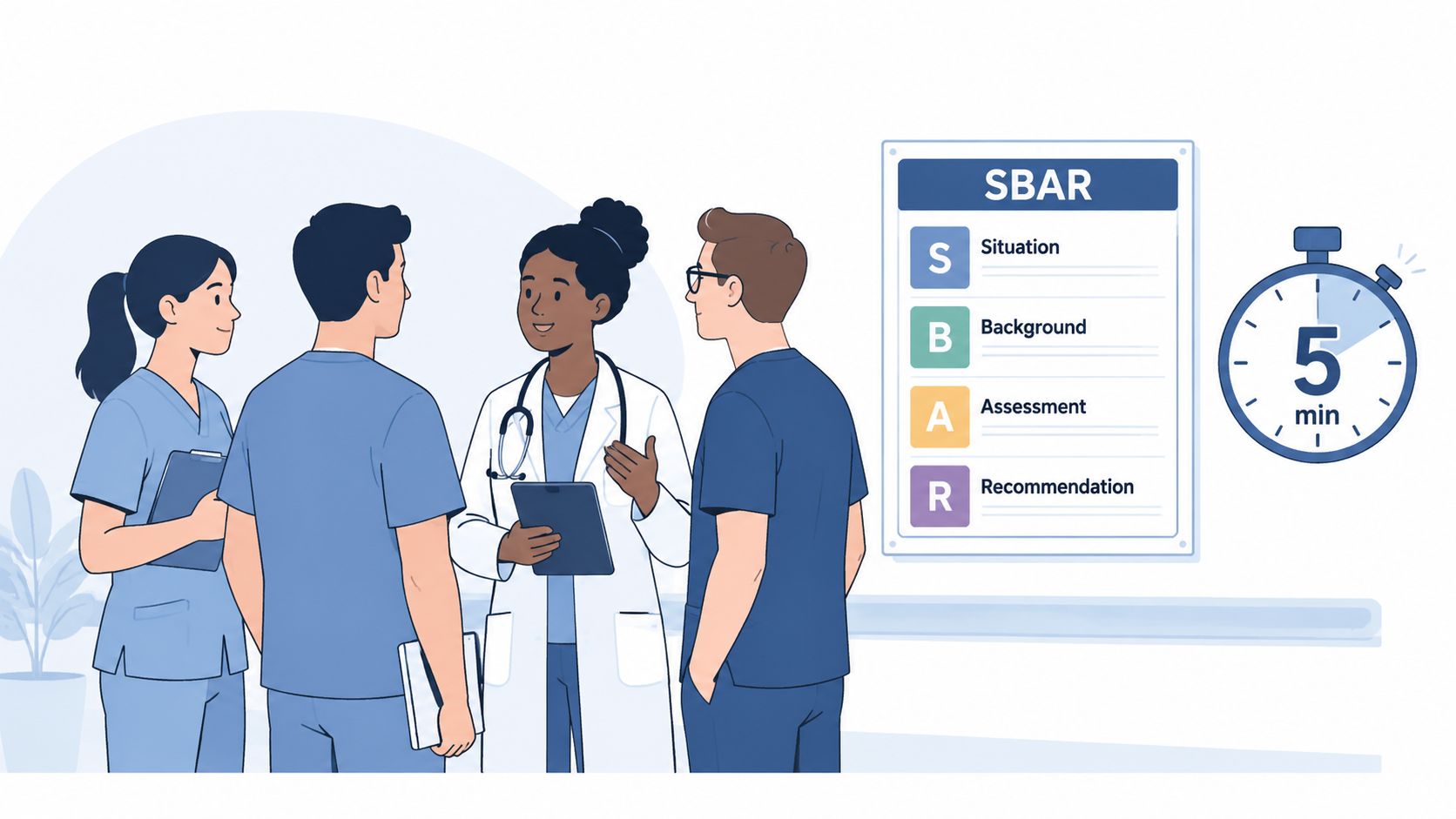
The real value comes from consistency. Teams that huddle daily with a clear format build psychological safety over time. Everyone knows their voice matters, roles are clarified, and communication becomes second nature.
How It Works
A facilitator or charge nurse leads a quick standing meeting using a consistent framework. The STOP acronym works well: Staffing, Tasks, Opportunities, Problems. Each person shares updates in under a minute. Once a month, swap in a communication drill where the team practices SBAR handoffs or escalation scenarios.
The huddle isn't just about information transfer. It's where teams learn to speak up, listen actively, and trust each other before the pressure hits.
Real-World Examples
- Emergency departments running weekly SBAR drills during huddles, cutting handoff errors by 30%
- ICU teams using huddles to address staffing concerns and workload equity openly
- Surgical units conducting pre-op huddles with the full OR team present
- Pediatric units celebrating patient wins during daily huddles to boost morale
Tips for Implementation
- Keep it to 5-10 minutes maximum. Respect everyone's schedule.
- Include all disciplines: nursing, physicians, respiratory, pharmacy
- Use a consistent format like STOP so meetings feel predictable and safe
- Make it psychologically safe. No blame. Focus on systems, not individuals.
- Celebrate wins and call out good teamwork when you see it
- Run communication drills monthly, not daily. Keep the novelty alive.
- Track safety outcomes like falls, errors, and near-misses, then share improvements with the team
- Leaders must participate and model vulnerability from the front
Why This Deserves a Spot on the List
Among team building activities for healthcare, huddle optimization stands out because it requires almost no extra time. You're already meeting. The shift is in how you structure and lead those minutes. Programs like TeamSTEPPS from the Department of Defense and AHRQ have proven that structured communication frameworks reduce errors and build stronger teams simultaneously.
Magnet-designated hospitals and high-reliability organizations have adopted this approach for good reason. It works at every scale, from small clinics to large health systems. Learn more about the elements of effective team dynamics and how structured communication fits into high-performing teams.
The key is leadership buy-in. When leaders show up, participate openly, and resist the urge to turn huddles into lectures, the team follows suit. That's when real change happens.
6. Simulation-Based Team Training (SBT) with Debriefing
Simulation-Based Team Training recreates clinical emergencies using high-fidelity mannequins or virtual scenarios. Teams respond together to events like cardiac arrest, sepsis, or pediatric airway crises, then participate in structured debriefing that examines both clinical performance and how the team functioned as a unit.
This method stands apart from individual skill practice because it focuses entirely on team dynamics under pressure. Each member learns how colleagues think, communicate, and make decisions during high-stress situations.
The debriefing session is where teams grow most. Watching yourself respond in real time reveals communication gaps no lecture ever could.
How It Works
A trained facilitator runs your team through a realistic clinical scenario. Everyone plays their actual role, makes decisions collectively, and manages the situation as it unfolds. Afterward, the team reviews what happened through guided debriefing focused on communication, role clarity, and teamwork.
Real-World Examples
- ED teams practicing cardiac arrest scenarios to improve first-shock times
- ICU teams training on sepsis recognition and rapid response protocols
- Labor and delivery teams running obstetric emergencies like eclampsia or shoulder dystocia
- Pediatric hospitals conducting monthly PALS simulations with full interdisciplinary teams
- Anesthesia teams rehearsing crisis scenarios involving airway complications or anaphylaxis
Tips for Implementation
- Schedule quarterly at minimum, monthly when possible
- Rotate scenarios regularly to prepare for variety
- Include the full team: nurses, physicians, respiratory therapists, pharmacy
- Use video debriefing so teams can observe their own communication patterns
- Focus debriefing on team dynamics, not just clinical accuracy
- Build psychological safety with a "no wrong answers" approach
- Track metrics like response times and communication clarity over time
- Link simulation outcomes to actual performance data when available
Why This Deserves a Spot on the List
Among team building activities for healthcare, SBT with debriefing delivers measurable improvements in how teams perform during real emergencies. The structured reflection component turns every simulation into a learning experience that sticks. The growing acceptance of online education is making this more accessible; many accredited online programs now integrate simulation-based principles, offering high-quality training without the logistical hurdles of in-person sessions.
This aligns with a broader industry shift: organizations increasingly recognize that online training delivers equal, if not superior, outcomes. To learn more about emergency response team training and how simulation principles apply across modern clinical settings, online resources provide a wealth of information. The key is regularity. Teams that train together consistently build the communication patterns and mutual trust that save lives when seconds count.
7. Volunteer Service & Community Health Projects
Team-based volunteer work gives healthcare professionals a chance to step outside the clinical setting and serve together. Whether it is free health screenings, community vaccination events, disaster response, or health education in underserved areas, these projects build team cohesion while meeting real community needs. Unlike office-based exercises, volunteering together carries built-in meaning. Teams work toward shared external goals, see direct patient impact, and bond through purposeful work that aligns with why they entered healthcare in the first place.
How It Works
Your team partners with a nonprofit, community health center, or disaster relief organization to deliver care or education in a non-clinical setting. Roles are assigned based on skills, but everyone works side by side toward the same outcome. The shared experience of serving others creates trust and camaraderie that carries back into daily operations.
Purpose-driven teamwork builds stronger bonds than any conference room exercise ever could.
Real-World Examples
- ED teams providing free blood pressure screenings at community health fairs
- Cardiac nurses leading CPR training in underserved neighborhoods
- Hospital teams deploying together for disaster response after floods or hurricanes
- Pediatric teams vaccinating children at school-based clinics
- Nursing teams delivering health education to immigrant communities
- Surgical teams performing pro-bono procedures through global health partnerships
Tips for Implementation
- Align with your mission so staff see volunteering as a natural extension of their work
- Survey your team to identify preferred causes, since interests vary widely
- Schedule during low-census periods or offer optional shift coverage to avoid burnout
- Partner with established nonprofits like the Red Cross or Partners in Health to reduce coordination burden
- Close with a team meal or celebration to debrief and recognize the effort together
- Share outcomes with the full staff, including numbers screened, people taught, or lives touched
- Recognize volunteers formally through internal newsletters or awards ceremonies
- Repeat annually or quarterly to build tradition and deepen relationships over time
Why This Deserves a Spot on the List
Among team building activities for healthcare, volunteer service stands apart because it serves two purposes at once. Your team strengthens how they work together while making a measurable difference in the community. Healthcare system foundations and nonprofit partnerships have long recognized this dual benefit, which is why organizations like Médecins Sans Frontières and community health centers continue to rely on team-based volunteer deployments.
The key is intentionality. A one-off volunteer day feels nice, but recurring projects build the kind of trust and shared identity that improves teamwork when your staff returns to high-pressure clinical environments.
8. Structured Mentorship and Reverse Mentoring Programs
Mentorship programs pair experienced staff with less experienced colleagues for ongoing professional development. Reverse mentoring flips this dynamic, with junior staff guiding senior colleagues in areas like technology or new clinical practices. Structured programs establish clear goals, regular meeting schedules, and documented learning outcomes. While primarily developmental, effective mentorship builds team relationships, increases knowledge sharing, and fosters psychological safety across units.
How It Works
A formal framework matches mentors and mentees based on goals, personality, and schedule. Participants meet regularly, follow a structured learning plan, and track progress toward specific outcomes. The key is consistency. Bi-weekly meetings matter more than long, infrequent sessions.
The best mentorship programs treat learning as a two-way street. When senior physicians learn EHR shortcuts from residents, both sides feel valued.
Real-World Examples
- New graduate nurses paired with experienced ICU nurses during first-year orientation
- Senior nurses mentoring mid-level nurses toward leadership roles
- Residents mentored by senior physicians on clinical decision-making
- Senior physicians reverse-mentored by residents on electronic health record efficiency
- New ACLS-certified nurses mentored on practical protocol integration
Tips for Implementation
- Set clear goals at the start: What should the mentee learn or accomplish?
- Train your mentors - good mentoring skills can be taught
- Match intentionally based on personality, goals, and schedule
- Schedule regular meetings - bi-weekly minimum; consistency matters more than duration
- Create structured learning plans - avoid purely social meetings
- Include reverse mentoring to ensure bidirectional learning
- Track outcomes like certifications achieved, leadership roles gained, and retention rates
- Celebrate relationships publicly through newsletters or awards
- Connect mentorship to continuing education and professional growth plans
Why This Deserves a Spot on the List
Among team building activities for healthcare, mentorship programs stand out because they serve double duty. Staff develop clinical skills while building trust across experience levels. This is another area where modern education models shine. Mentorship can be powerfully combined with flexible, accredited online CE. A mentor can guide a mentee through an online ACLS or PALS course, providing real-world context that solidifies learning. This blended approach is gaining traction as hospitals and clinics increasingly recognize the value and validity of online education formats.
The key is consistency. One mentorship pairing won't transform your culture. But regular, well-structured programs build the kind of trust and knowledge sharing that improves retention and patient care over time.
9. Collaborative Quality Improvement & Rapid Cycle Testing Projects
Quality improvement (QI) projects give healthcare teams a hands-on way to solve real problems together. Instead of sitting through another meeting, your team identifies a specific clinical issue, tests a solution, and measures the results using rapid improvement cycles. The most common framework is Plan-Do-Study-Act (PDSA), which moves teams from idea to implementation in weeks rather than months.
What makes this one of the most effective team building activities for healthcare is the shared purpose. Everyone works toward a measurable goal that directly affects patient care, which creates genuine engagement rather than forced participation.
How It Works
A small team forms around a specific problem, such as reducing central line infections or shortening door-to-balloon times. They map the current process, identify where breakdowns occur, and design a small test of change. Data is collected quickly, results are reviewed weekly, and adjustments are made in real time.
Frontline staff who lead these projects develop ownership over both the problem and the solution, which builds trust across roles.
Real-World Examples
- ED teams reducing left-without-being-seen rates through rapid triage improvements
- ICU teams lowering central line-associated bloodstream infections with protocol changes
- Surgical teams improving operating room efficiency and cutting case delays
- Pediatric teams reducing medication errors through new verification processes
- Hospital-wide teams implementing sepsis protocols to improve door-to-antibiotics time
Tips for Implementation
- Start with visible, solvable problems to build momentum early
- Include frontline staff as team leads, not just managers
- Set weekly meetings because momentum depends on frequency
- Use simple data visualization like run charts to show progress
- Celebrate small wins every week to maintain engagement
- Share failures as learning opportunities, never as blame
- Spread successful improvements across units and departments
Why This Deserves a Spot on the List
Rapid cycle QI projects stand out among team building activities because they produce two outcomes at once: stronger teamwork and measurable improvements in patient care. Organizations like the Institute for Healthcare Improvement and The Joint Commission have championed this approach for years, and it continues to gain traction across clinical settings.
Teams that work through PDSA cycles together build communication habits, mutual respect, and process knowledge that carry over into daily operations. The collaborative nature of these projects breaks down silos between physicians, nurses, and support staff in ways that traditional training simply cannot.
For teams looking to deepen their understanding of QI frameworks and earn continuing education credits in the process, accredited online programs in quality improvement offer flexible options that fit into busy clinical schedules. Online CE has become widely accepted across healthcare institutions, making it easier than ever for teams to build these skills without pulling everyone off the floor for in-person sessions.
10. Escape Room Challenges
Escape rooms are live-action puzzles where a team is "locked" in a themed room and must solve a series of riddles and challenges to get out within a time limit. While often seen as a casual outing, a well-chosen escape room is an excellent team building activity for healthcare professionals. It forces a group to communicate clearly, delegate tasks, and solve problems under pressure—skills that are directly transferable to a clinical setting.
How It Works
Your team enters a themed room with a clear objective and a ticking clock, usually 60 minutes. Success requires everyone to contribute, whether by finding clues, deciphering codes, or organizing information. A facilitator often observes and can provide hints if the team gets stuck. The experience concludes with a debrief to discuss how the team worked together.
The pressure of the clock mimics the urgency of a clinical emergency, revealing how your team communicates when stakes are high.
Real-World Examples
- Nursing teams using a "zombie outbreak" room to practice rapid problem-solving.
- New residency cohorts using an escape room as an icebreaker during orientation.
- Surgical teams working through a complex puzzle room to refine non-verbal communication.
- Virtual teams using online escape rooms to build rapport across different locations.
Tips for Implementation
- Choose a relevant theme if possible, but any complex challenge will work.
- Book a private room to ensure it's just your team participating.
- Facilitate a debrief afterward. Ask questions like, "Who emerged as a leader?" and "How did we handle disagreements?"
- Keep teams small (4-8 people) to ensure everyone can participate.
- Focus on the process, not just winning. The goal is improved teamwork.
Why This Deserves a Spot on the List
Unlike purely clinical simulations, escape rooms provide a low-stakes, fun environment to observe and improve team dynamics. They reveal natural leaders, highlight communication styles, and force collaboration in a novel way. The shared sense of accomplishment (or humorous failure) builds camaraderie that lasts long after the activity is over. It's a powerful way to see how your team functions when removed from the hierarchy and stress of the hospital floor.
Turn Team Building Into Continuous Improvement
The team building activities covered in this guide share one critical thread: they treat collaboration as an ongoing practice rather than a box to check. From escape room challenges and case-based simulations to peer teaching sessions and reverse mentoring programs, each approach targets a specific skill set while strengthening the relationships that hold your team together.
When activities are embedded into daily workflows, they stop feeling like interruptions and start functioning as operational improvements. A clinical huddle becomes a communication drill. A certification challenge becomes a unit-wide learning event. A quality improvement project becomes a shared mission rather than an assigned task.
These activities do more than boost morale. They sharpen decision-making under pressure, close knowledge gaps between departments, and create psychological safety where team members speak up about concerns before they become errors. In a healthcare environment, that level of trust directly impacts patient outcomes.
The most effective organizations treat team building activities as part of their education strategy, not separate from it. This is where flexible, accredited learning platforms play a significant role. It's time to move past the outdated belief that only in-person training is valid. The healthcare industry is evolving, and with numerous studies confirming their effectiveness, online CE and certifications are gaining widespread acceptance. When your team can access high-quality continuing education on their own schedules, training becomes consistent and certifications become shared goals.
The takeaway is straightforward: invest in your team's growth the same way you invest in clinical equipment or patient safety protocols. The return shows up in retention rates, communication quality, and the confidence your staff brings to every shift.
Ready to make team-wide certification part of your team building activities? ProMed Certifications is at the forefront of delivering convenient, credible online education. We offer accredited online courses in ACLS, BLS, PALS, NRP, and CPR that your entire team can complete on their own schedule, at no upfront cost, with same-day digital cards. ProMed Certifications makes it simple to align your team's education with your operational goals.
.avif)
Stay compliant with ProMed+
Certifications included: ACLS, BLS, PALS, CPR & Neonatal Resuscitation
Unlimited continuing education: over 200 hours of accredited CME
All-inclusive: One price. No surprises.
Get certified today

The Advanced Cardiac Life Support (ACLS) is an accredited online medical certification course that teaches medical professionals to respond to nearly all cardiopulmonary emergencies.

The Pediatric Advanced Life Support (PALS) Recertification instructs medical professionals on performing pediatric cardiopulmonary resuscitation in emergencies.

The Basic Life Support (BLS) Recertification is intended to teach healthcare professionals the basic steps of CPR and rescue breathing for adults, children, and infants.

Our online medical certification course for CPR, Automated External Defibrillator (AED), and First Aid is designed to teach adult, child, and infant CPR and AED use.

The Neonatal Resuscitation Certification trains medical professionals in performing resuscitation procedures and life-saving techniques for newborns at the time of delivery.

.png)
.png)
.png)