


Nursing Diagnosis for Acid Reflux Guide
.png)
Acid reflux care most often centers on three NANDA nursing diagnoses, Acute Pain, Risk for Aspiration, and Imbalanced Nutrition: Less Than Body Requirements. GERD affected an estimated 825.60 million people in 2021, after rising from 450.76 million prevalent cases in 1990.Global GERD burden analysis
You're assessing a patient who reports burning behind the sternum, sour regurgitation, coughing at night, and poor sleep. The medical diagnosis may be gastroesophageal reflux disease, or GERD, but your nursing judgment must go further. What response is affecting this person most right now? Is pain limiting rest? Is swallowing unsafe? Is fear of eating reducing intake?
That distinction makes a nursing diagnosis for acid reflux useful at the bedside. We aren't naming a disease. We're translating symptoms into patient-centered problems, setting outcomes, and choosing interventions that protect comfort, nutrition, and airway safety.
Why Nursing Diagnosis for Acid Reflux Matters
A patient arrives after several difficult nights. They describe heartburn after meals, fluid rising into the throat when lying down, and anxiety about falling asleep. They've started skipping dinner because eating seems to worsen the burning. Their medical record says GERD, but that label doesn't tell us which nursing problem needs attention first.
A nursing assessment turns that broad diagnosis into practical priorities. We ask the patient to describe the pain, identify when regurgitation occurs, review swallowing, observe oral intake, and assess whether coughing or breathing changes occur after reflux episodes. Each answer helps us decide whether the dominant response involves pain, aspiration risk, nutrition, anxiety, or another problem supported by assessment findings.
Disease labels and patient responses
A medical diagnosis identifies the disease process. A nursing diagnosis identifies how the patient responds to that process. GERD can produce a cluster of concerns, including burning pain, regurgitation, cough, dysphagia, reduced intake, sleep disruption, and worry.
That's why two patients with the same medical diagnosis may need different nursing priorities. One may eat normally but report severe pain. Another may have little pain but cough after regurgitation and avoid food because swallowing feels difficult.
Preceptor perspective: Don't let the medical diagnosis do your clinical thinking for you. Ask what the patient can't do, tolerate, or safely manage because of the reflux.
GERD creates a substantial and persistent burden. A 2020 meta-analysis estimated global pooled prevalence at 13.98% of adults, approximately 1 in 7 people worldwide, based on 102 studies and 63,394 participants. Regional variation ranged from 12.88% in Latin America and the Caribbean to 19.55% in North America, reinforcing why nurses encounter reflux-related symptoms across many care settings.
Why accurate prioritization improves care
A clear diagnosis guides more than documentation. It helps us:
- Relieve discomfort: Connect burning pain to mucosal irritation and evaluate whether interventions work.
- Protect the airway: Recognize when regurgitated contents may enter the respiratory tract.
- Support nutrition: Identify reduced intake, swallowing difficulty, or food avoidance before the patient becomes depleted.
- Teach with purpose: Link positioning, meal patterns, medication use, and symptom tracking to a specific patient need.
- Evaluate progress: Compare the patient's current symptoms and intake with defined outcomes.
GERD is often recognized through recurring symptom patterns rather than a single universally available test. One global burden analysis described GERD clinically through recurrent heartburn and/or regurgitation at least weekly, while noting that confirmatory testing isn't widely available in population settings. (Global GERD burden analysis) At the bedside, that makes careful observation and patient history especially important.
Understanding GERD and the NANDA Framework
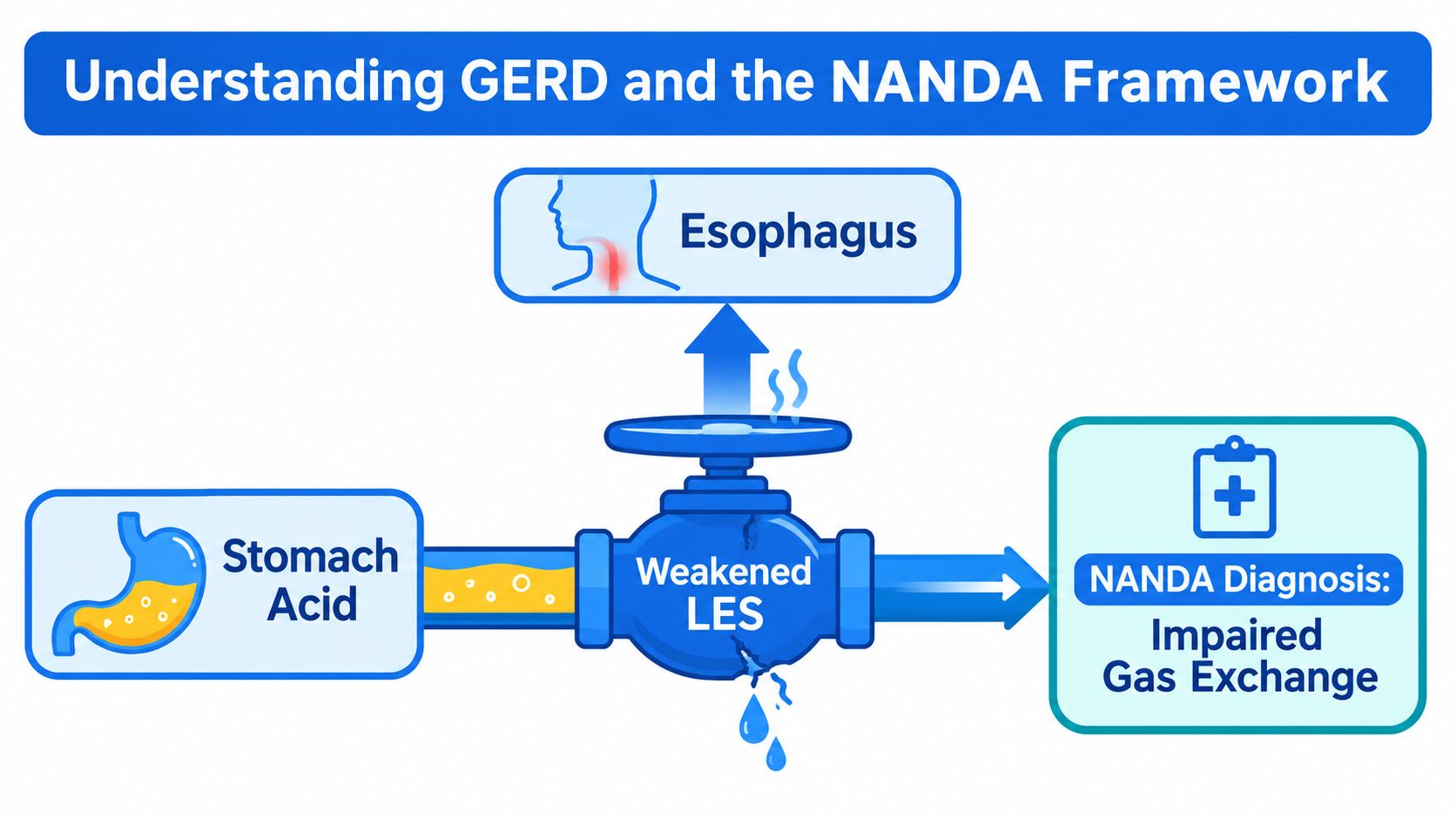
Think of the lower esophageal sphincter, or LES, as a one-way valve in a plumbing system. It should open to let food pass into the stomach, then close to keep gastric contents below the diaphragm. When the valve weakens or relaxes inappropriately, stomach contents can move upward into the esophagus.
The esophagus isn't designed to tolerate repeated exposure to gastric acid. The patient may feel burning behind the breastbone, notice sour regurgitation, develop a cough, or experience difficulty swallowing. We connect those observable responses to nursing diagnoses instead of documenting only “GERD.”
How NANDA language helps
NANDA-I provides standardized diagnostic language that supports consistent communication among nurses and other clinicians. The framework separates a medical diagnosis from a nursing diagnosis:
- Medical diagnosis: Identifies GERD as a disease process.
- Nursing diagnosis: Identifies a human response, such as pain, aspiration risk, or inadequate nutrition.
- Related factors: Describe the cause or contributing condition that nursing care can address or monitor.
- Defining characteristics: Describe the assessment findings that support an actual diagnosis.
Risk diagnoses work differently from actual problem diagnoses. With Risk for Aspiration, we document risk factors rather than waiting for aspiration to occur. With Acute Pain, we need supporting cues such as the patient's report of burning discomfort, protective behavior, or interrupted sleep.
The clinical history matters because GERD symptoms can resemble other conditions. Chest discomfort should never be assumed to be reflux without appropriate assessment, particularly when cardiac causes remain possible. Dysphagia, gastrointestinal bleeding, unexplained weight loss, or persistent vomiting also warrant escalation according to the clinical setting and provider guidance.
For structured, self-paced professional learning, ProMed+ Nursing CE provides an online continuing education platform for nursing education needs. Well-designed online education is a valid way to reinforce assessment and care-planning skills alongside workplace orientation and facility-specific requirements.
Top 3 NANDA Diagnoses for Acid Reflux
The strongest nursing diagnosis for acid reflux depends on your assessment findings. For adult GERD, three clinically defensible priorities are Acute Pain, Risk for Aspiration, and Imbalanced Nutrition: Less Than Body Requirements.GERD nursing clinical guide
Acute Pain
Use this diagnosis when reflux-related irritation produces a painful response. The patient may describe burning, pressure, or discomfort behind the sternum. We should document the patient's own description, timing, triggers, severity, and effect on sleep or activity.
- Related factor: Chemical irritation of the esophageal mucosa from refluxed gastric contents.
- Defining characteristics: Patient-reported burning retrosternal pain, guarding, restlessness, disrupted sleep, or avoidance of meals because of discomfort.
- Clinical connection: A patient who says, “The burning starts after I eat and gets worse when I lie down,” gives us both a symptom and a pattern to investigate.
Avoid using “Acute Pain” solely because the chart lists GERD. The patient's report and observed response must support the diagnosis.
Risk for Aspiration
Aspiration risk becomes more important when reflux occurs with impaired swallowing, a diminished cough reflex, or increased epigastric pressure. Regurgitated contents may move toward the airway instead of remaining in the esophagus.
- Risk factors: Dysphagia, impaired protective reflexes, reduced level of consciousness, vomiting or frequent regurgitation, and conditions that increase abdominal pressure.
- Assessment cues: Coughing during or after regurgitation, wet or gurgly voice, new wheezing, respiratory distress, or a change in breath sounds.
- Clinical connection: A patient who repeatedly coughs after sour fluid reaches the throat needs airway-focused assessment, not only antacid teaching.
Because this is a risk diagnosis, don't wait for aspiration pneumonia or severe respiratory compromise before acting. Positioning, swallowing assessment, and timely escalation can reduce preventable exposure.
Imbalanced Nutrition Less Than Body Requirements
This diagnosis fits when reflux symptoms interfere with adequate intake. Pain, dysphagia, nausea, fear of symptoms, or repeated dietary restriction can all reduce the amount or variety of food a patient consumes.
- Related factors: Pain with eating, difficulty swallowing, nausea, early satiety, or avoidance of foods associated with symptoms.
- Defining characteristics: Reduced meal intake, reported food avoidance, weakness, dehydration cues, or an observed decline from the patient's usual eating pattern.
- Clinical connection: A patient who skips meals to prevent burning may need nutrition support even if they haven't yet shown obvious weight change.
Document what you can verify. “Poor nutrition” is too vague. Record the patient's intake pattern, swallowing experience, hydration status, and barriers to eating.
Assessment Cues and Expected Outcomes
Assessment gives the diagnosis its foundation. Start with the patient's story, then verify it through observation and focused examination. Ask when symptoms begin, what makes them worse, whether regurgitation occurs during sleep, and how the problem changes eating, activity, and rest.
For pain, assess location, quality, severity, timing, duration, and associated symptoms. For aspiration risk, observe swallowing and listen for coughing, wheezing, wet vocal quality, or respiratory changes after regurgitation. For nutrition, review intake, food avoidance, hydration cues, swallowing difficulty, and functional ability to eat.
Match each cue to a measurable outcome
A good outcome describes what the patient will report or demonstrate. It should include a clear behavior, symptom target, or safety indicator and a defined time frame.
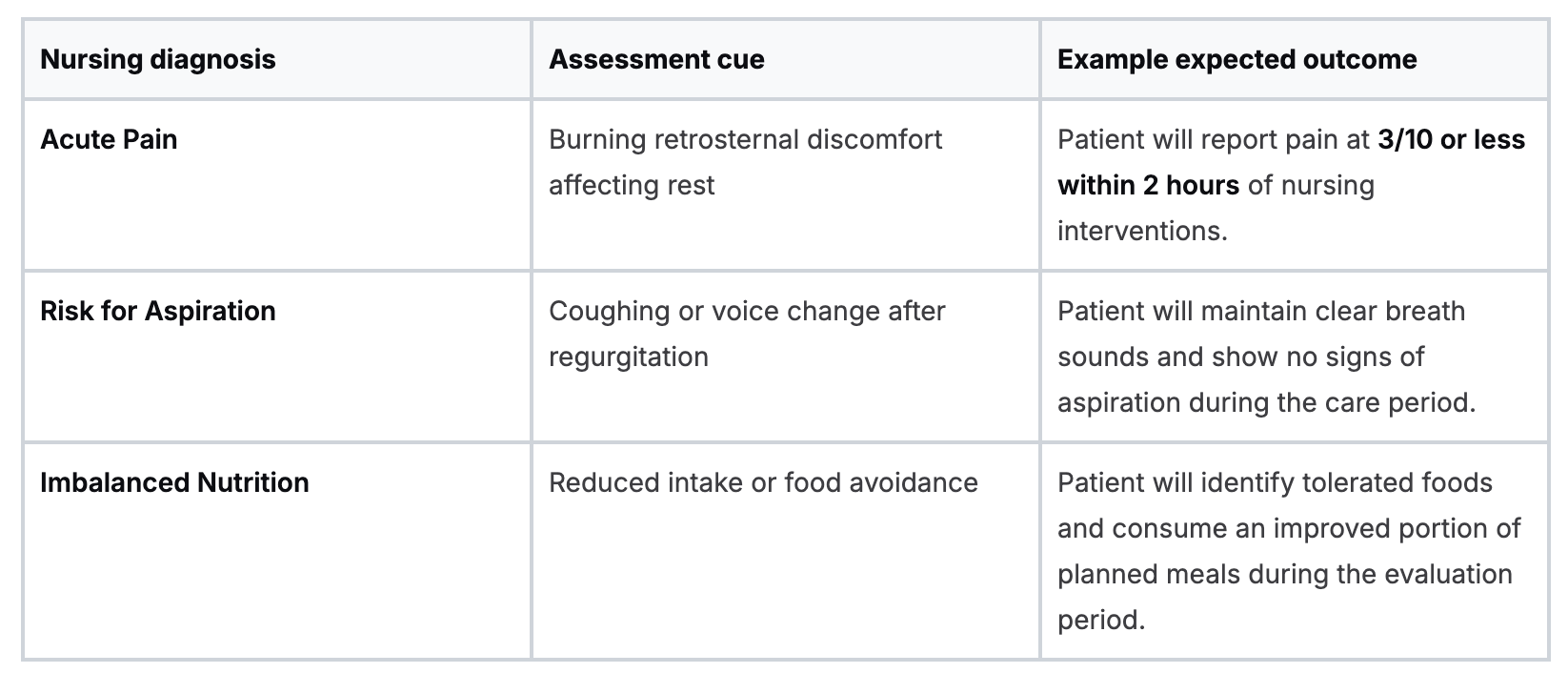
The pain target of 3/10 or less within 2 hours is an example of how to write a measurable goal. Adapt the target to the patient, clinical setting, baseline, and facility policy. Don't impose an identical outcome on every person.
Use a focused head-to-toe approach
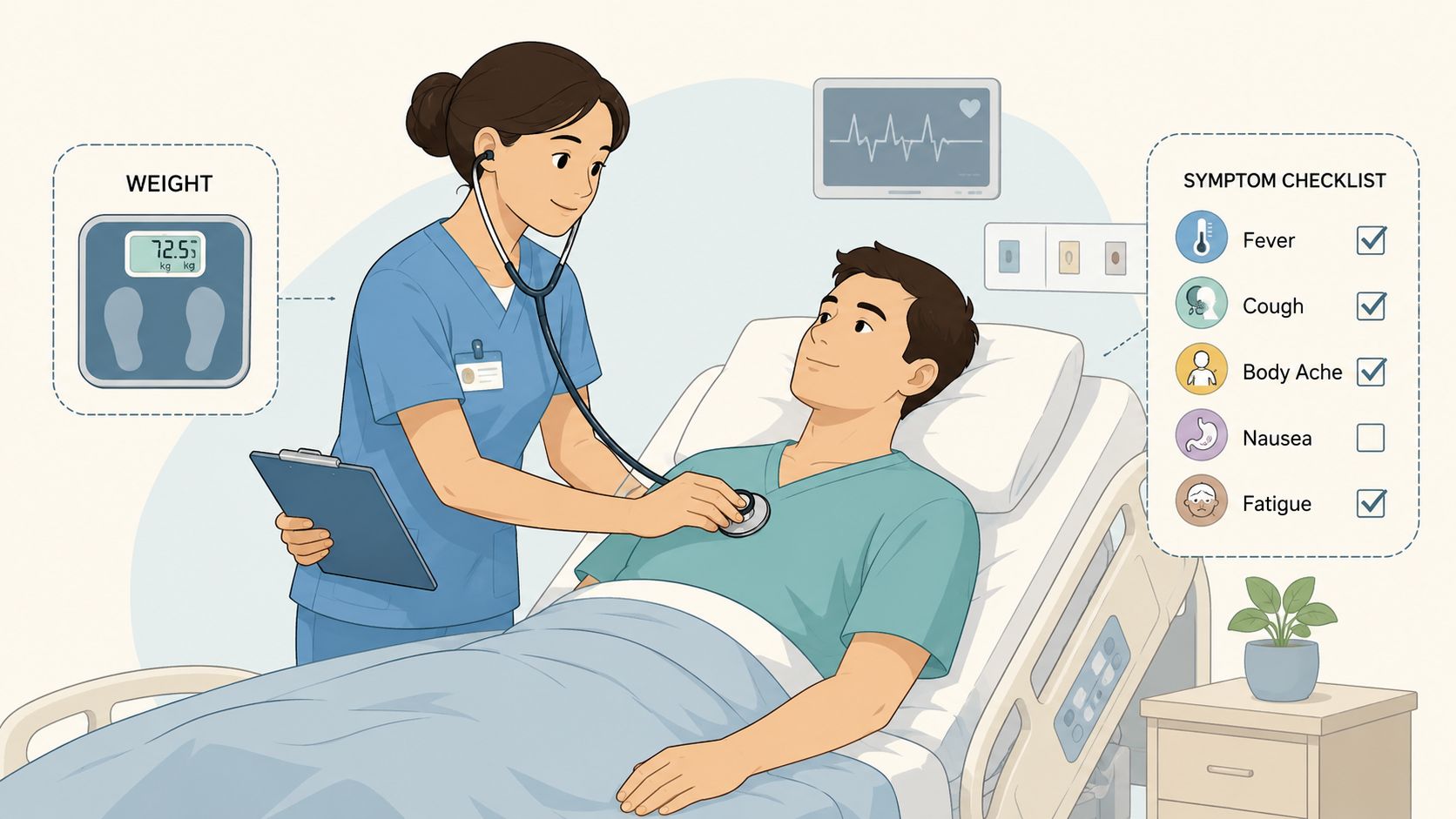
A reflux assessment still belongs within a complete nursing assessment. Review general appearance, hydration, oral intake, respiratory status, abdominal findings, and the patient's emotional response. The head-to-toe assessment guide can help students organize findings without losing the patient's immediate priority.
Expected outcomes should change when the patient's condition changes. If pain improves but coughing increases, airway safety moves higher on the priority list. If symptoms settle but intake remains poor, nutrition requires continued attention.
Practical rule: Every intervention should have an observable reassessment. If you elevate the head of the bed, reassess symptoms, breathing, and tolerance. If you teach meal changes, ask the patient to explain the plan in their own words.
Evidence-Based Interventions and Rationales
Interventions should follow the diagnosis, not a memorized GERD checklist. We're trying to reduce exposure, protect the airway, relieve discomfort, support intake, and identify deterioration early.
Protecting the airway
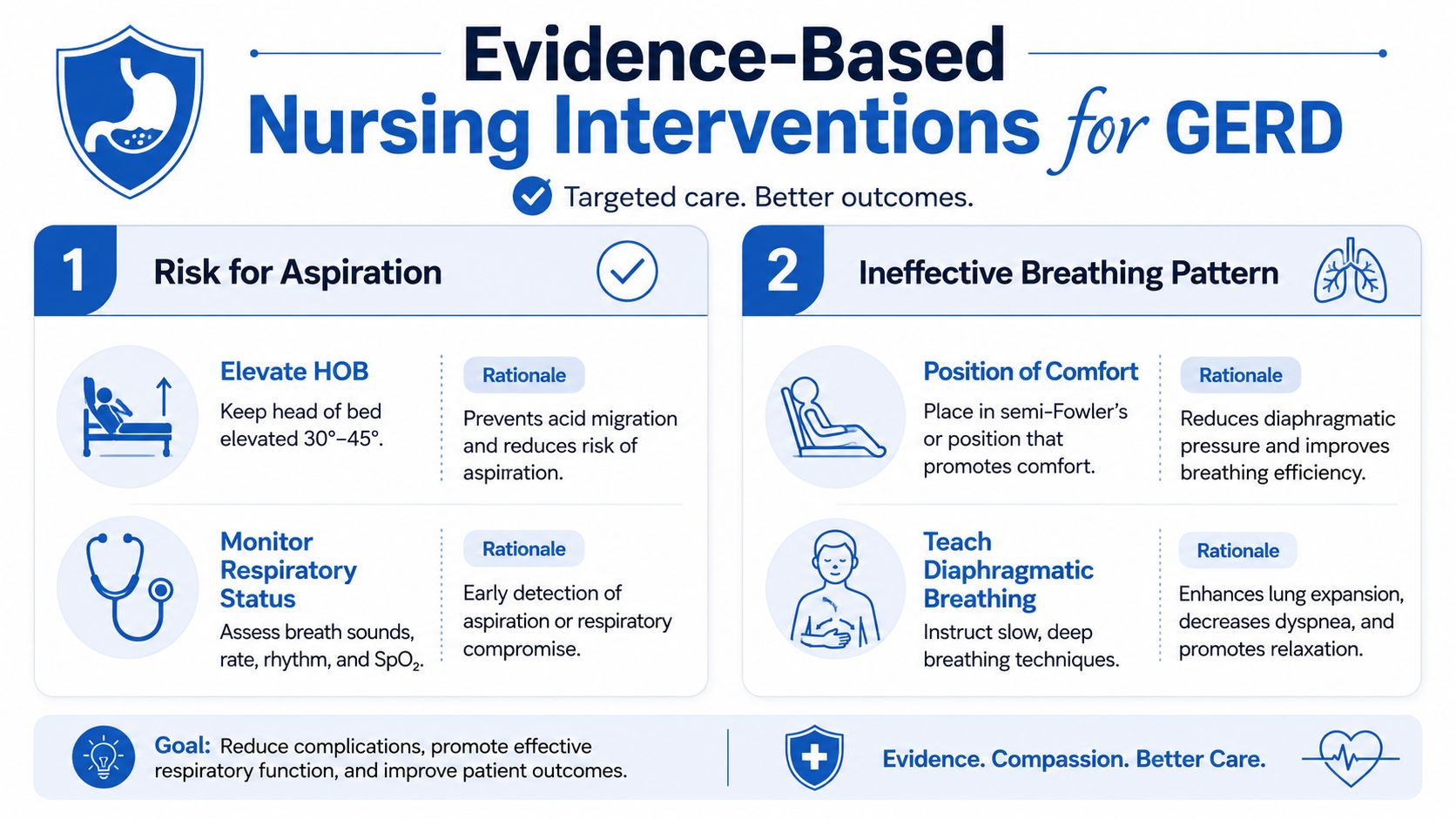
For Risk for Aspiration, maintain a safe position with the head of the bed raised when appropriate and consistent with the patient's condition. Keep the patient upright during and after intake according to facility policy, and coordinate swallowing evaluation when dysphagia or impaired protective reflexes is present.
- Monitor respiratory status: Assess breath sounds, respiratory effort, oxygenation according to local practice, cough, and vocal quality.
- Recognize escalation cues: Report respiratory distress, persistent coughing after regurgitation, cyanosis, or new abnormal breath sounds promptly.
- Review swallowing safety: Observe the patient's ability to handle secretions and follow ordered diet or texture modifications.
The rationale is straightforward. Gravity helps keep refluxed contents away from the airway, while respiratory monitoring detects a complication early.
Relieving pain and reducing reflux exposure
For Acute Pain, document the pain pattern and administer prescribed therapy safely. Reinforce individualized meal and positioning strategies, such as avoiding known triggers, choosing smaller meals when appropriate, and remaining upright after eating.
Medication teaching must follow the prescription and local protocol. Nurses should assess adherence, timing, response, and adverse effects rather than independently changing doses. Persistent symptoms, alarm features, or chest pain requiring cardiac evaluation should be escalated.
Supporting nutrition
For Imbalanced Nutrition: Less Than Body Requirements, collaborate with the provider and dietitian when intake remains inadequate. Offer tolerated foods within the prescribed plan, monitor hydration and intake, and explore the patient's beliefs about trigger foods instead of creating unnecessary restrictions.
A useful teaching conversation asks, “What have you stopped eating, and what happens when you eat it?” That question identifies both the nutritional barrier and the patient's symptom pattern.
Why online continuing education belongs in clinical preparation
Online CE is just as effective as in-person training when the course uses sound instructional design, meaningful practice, and assessment. A controlled trial involving 5,621 U.S. physicians across more than 100,000 online CME activities found an average effect size of 0.75, with evidence-based decisions in clinical vignettes increasing by 45%. Interactive case-based activities produced a 51% increase in that outcome.Online CME controlled trial
A review of electronic continuing education identified 15 eligible studies. In comparisons with no intervention, 4 of 6 studies showed a statistically significant advantage, with knowledge effects lasting up to 12 months and practice effects lasting up to 5 months.Electronic continuing education review Another evaluative study found significant gains in knowledge and self-reported practice performance, with courses containing a clinical tool producing greater practice change.Online healthcare CPE evaluation
These findings support a practical conclusion. Nurses can refresh reflux assessment, care planning, and patient education online without treating flexibility as a compromise in quality. The evidence-based practice resource offers a useful way to connect clinical decisions with supporting evidence.
The industry's view of online learning is shifting. Hospitals, clinics, and professional organizations increasingly recognize accredited online CE and certification formats, provided the education meets applicable requirements. The outdated belief that only AHA or American Red Cross in-person classes are valid isn't universally true. Recognition depends on the employer, credentialing body, course requirements, and applicable jurisdiction, so nurses should verify local policy before enrollment.
Online and in-person education can deliver equal quality. Online learning adds flexibility, reduces travel and scheduling barriers, and lets clinicians revisit difficult concepts. In-person training may offer immediate physical demonstration and live interaction. The right comparison is not “online versus real.” It's whether the course provides credible content, active learning, assessment, documentation, and recognition for the learner's setting.
Sample Care Plan Template
A useful care plan makes our reasoning visible, from assessment through evaluation. Use the structure below for study notes, then adapt it to your organization's documentation system. Follow current NANDA-I terminology, facility policy, scope of practice, and individualized orders.
Start with the diagnostic statement
Diagnosis: Acute Pain related to chemical irritation of the esophageal mucosa, as evidenced by the patient's report of burning retrosternal discomfort and interrupted sleep.
This statement connects the nursing problem with a plausible related factor and observable patient findings. Writing “GERD related to GERD” only repeats the medical diagnosis. It does not describe the patient's response, which is the focus of nursing diagnosis.
Add the evidence and outcome
Related factors
- Refluxed gastric contents irritating the esophageal mucosa.
- Symptoms worsened by meals or recumbency.
- Reduced rest because of nighttime discomfort.
Defining characteristics
- Patient reports burning behind the sternum.
- Patient describes sour regurgitation.
- Patient reports disrupted sleep or meal avoidance.
Goal: Patient will report pain at a tolerable level selected with the nurse within the agreed evaluation period and identify positioning or meal practices that reduce symptoms.
The related factors explain possible contributors. The defining characteristics are the assessment evidence. Keeping these categories separate works like labeling the parts of a map, it helps us connect the patient's findings to the selected diagnosis without confusing causes and responses.
Select interventions with rationales
- Assess pain pattern and associated symptoms.
Establish a baseline and identify changes that require escalation, including findings that may not be reflux-related. - Position the patient upright when appropriate.
Upright positioning uses gravity to limit upward movement of gastric contents. - Administer prescribed medications and evaluate response.
Reassessment shows whether the ordered plan is helping and identifies adverse effects or persistent symptoms. - Teach the patient to describe triggers and warning signs.
This supports self-management and helps the patient seek care when symptoms become concerning. - Monitor intake and swallowing.
Pain can reduce nutrition. Dysphagia may increase aspiration risk and require a different priority.
A risk-focused plan would replace pain evidence with aspiration risk factors and emphasize respiratory monitoring, safe positioning, and swallowing evaluation. A nutrition-focused plan would track intake, hydration, food avoidance, and collaboration with dietary professionals.
Evaluate and revise
At evaluation, compare the actual response with the stated outcome. Did pain decrease? Did the patient eat more safely? Did coughing stop, persist, or worsen? If the outcome was not met, reassess the diagnosis instead of repeating the same intervention.
Students can compare this reasoning process with another example in the nursing diagnosis for asthma resource. The disease differs, but the method remains consistent: identify the human response, support it with assessment data, plan targeted care, and evaluate.
Online learning can support this preparation through flexible review and repeated practice. A systematic review of online CME reported improvement in at least one outcome in several studies, including satisfaction, knowledge, or practice change. (Systematic review of online CME) Accredited online CE may fit varied schedules, while in-person courses remain useful when an employer or regulator requires live skills validation.
Build confidence with reflux assessment, care planning, and broader clinical education through ProMed Certifications. Explore its online healthcare certification and continuing education options, then select training that fits your schedule and your employer's recognition requirements.
.avif)
Stay compliant with ProMed+
Certifications included: ACLS, BLS, PALS, CPR & Neonatal Resuscitation
Unlimited continuing education: over 200 hours of accredited CME
All-inclusive: One price. No surprises.
Get certified today

The Advanced Cardiac Life Support (ACLS) is an accredited online medical certification course that teaches medical professionals to respond to nearly all cardiopulmonary emergencies.

The Pediatric Advanced Life Support (PALS) Recertification instructs medical professionals on performing pediatric cardiopulmonary resuscitation in emergencies.

The Basic Life Support (BLS) Recertification is intended to teach healthcare professionals the basic steps of CPR and rescue breathing for adults, children, and infants.

Our online medical certification course for CPR, Automated External Defibrillator (AED), and First Aid is designed to teach adult, child, and infant CPR and AED use.

The Neonatal Resuscitation Certification trains medical professionals in performing resuscitation procedures and life-saving techniques for newborns at the time of delivery.

.png)
.png)
.png)