


Addiction Medicine Training: Your 2026 Guide
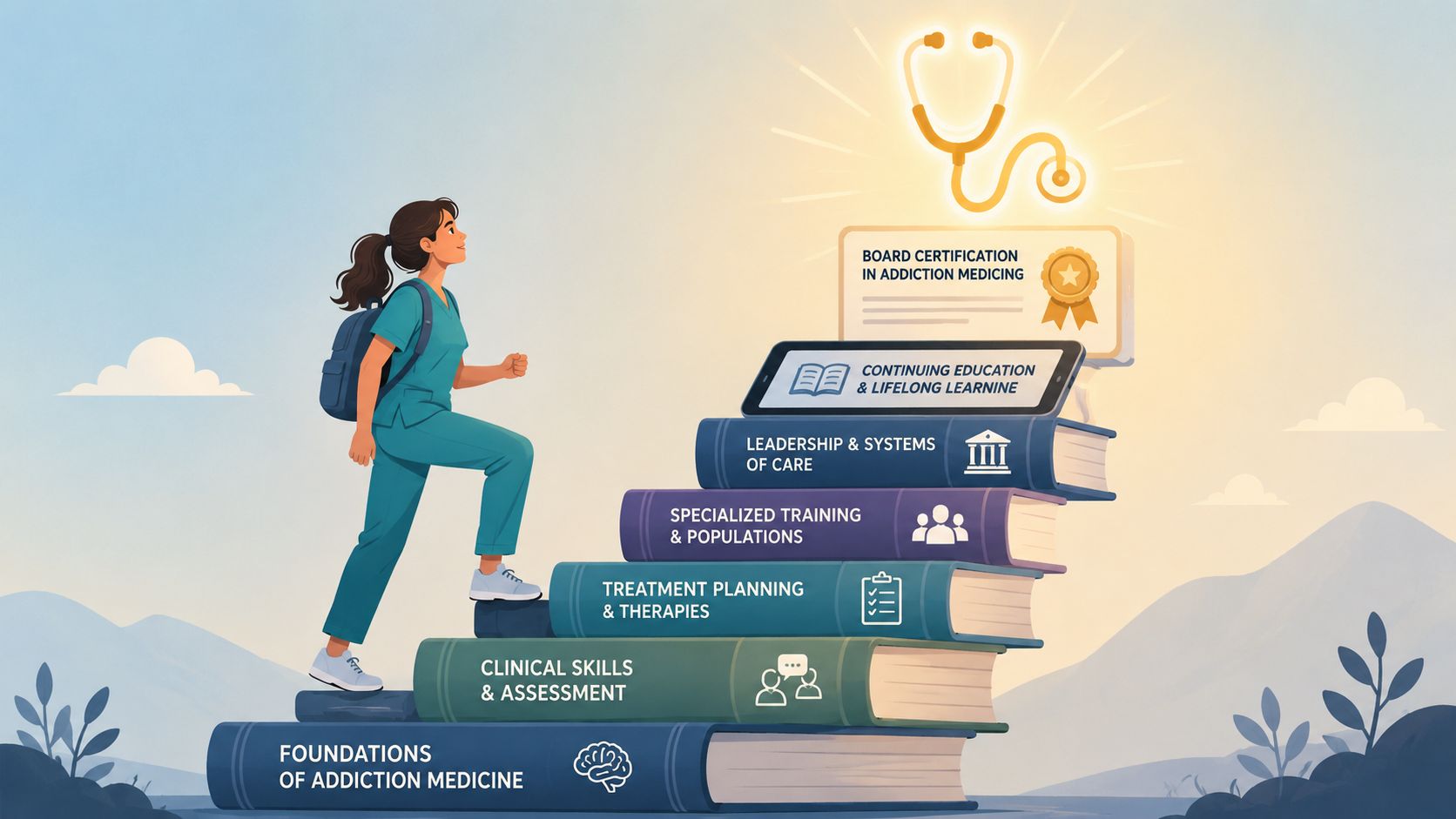
You may be seeing it already in your own practice. A patient comes in for pain, insomnia, anxiety, an infection, a fall, or a refill request, and underneath the visit is a substance use disorder that hasn't been fully addressed. You want to help. You also know that goodwill alone isn't enough.
That's where addiction medicine training becomes practical, not abstract. It gives clinicians a structured way to recognize substance use disorders, respond without stigma, choose appropriate treatment, and follow patients over time. For many healthcare professionals, the biggest challenge isn't whether this training matters. It's figuring out which path makes sense, what's required, and whether online education is valid.
It is. Modern addiction medicine education now spans fellowships, certifications, CME, CE, mentoring networks, and accredited online learning designed for busy clinicians. If you're trying to build competence without stepping away from work, there are credible options.
Why Addiction Medicine Training Matters Now
A common clinic day now includes a harder question than the chief complaint suggests. The patient scheduled for back pain may also be using nonmedical opioids. The patient with uncontrolled anxiety may be drinking heavily at night. The patient treated for cellulitis after injection drug use may return next week, and whether that visit goes well often depends on what the clinician knows about addiction care.
That is why addiction medicine training matters now. Substance use disorders show up across family medicine, emergency care, internal medicine, psychiatry, hospital medicine, women's health, pain management, and community health. The skill is no longer limited to a small group of specialists. It has become part of everyday clinical practice.
A useful comparison is diabetes care. Every clinician does not need to become an endocrinologist to recognize poor control, start appropriate treatment, and know when to refer. Addiction medicine works the same way. Training gives clinicians a method. It helps them identify substance use disorders earlier, assess risk more accurately, respond with less stigma, and connect patients to treatment that fits the setting.
For many clinicians, the primary barrier is not interest. It is access.
Traditional in-person training can be hard to fit around call schedules, clinic volume, family obligations, and geography. Online CE and CME have changed that. Accredited digital programs now let clinicians build practical addiction medicine skills with the same educational standards they expect from other areas of medicine, but in a format they can complete. That shift matters because scalable education is one of the few realistic ways to expand the workforce able to treat substance use disorders.
Why general clinicians need this skill set
You do not need fellowship training to make a meaningful difference for patients with substance use disorders. Many clinicians need enough training to do four things reliably:
- Recognize patterns early: identify unhealthy substance use during routine visits, not only during crises
- Assess immediate risk: know when withdrawal, overdose risk, polysubstance use, or psychiatric instability requires urgent action
- Use evidence-based treatment appropriately: understand when medications, behavioral treatment, referral, or combined care make sense
- Communicate in a way that keeps patients engaged: use language and counseling approaches that reduce shame and improve follow-through
The practical rule is simple. If patients with substance use disorders are already in your setting, addiction medicine training applies to your job.
Online education deserves a clear defense here. It is not a lesser substitute for "real" training. In many cases, it is the format that makes real training possible for working clinicians. Health systems, accrediting bodies, and professional societies increasingly rely on online learning because it is flexible, measurable, and easier to update as guidelines change. In a field where practice standards evolve and access gaps remain wide, that is a strength, not a compromise.
What Is Addiction Medicine as a Specialty
Addiction medicine is a subspecialty focused on prevention, evaluation, diagnosis, treatment, and recovery. Certified specialists are expected to provide screening, intervention, and treatment for substance use disorders and to recognize psychiatric and physical complications.
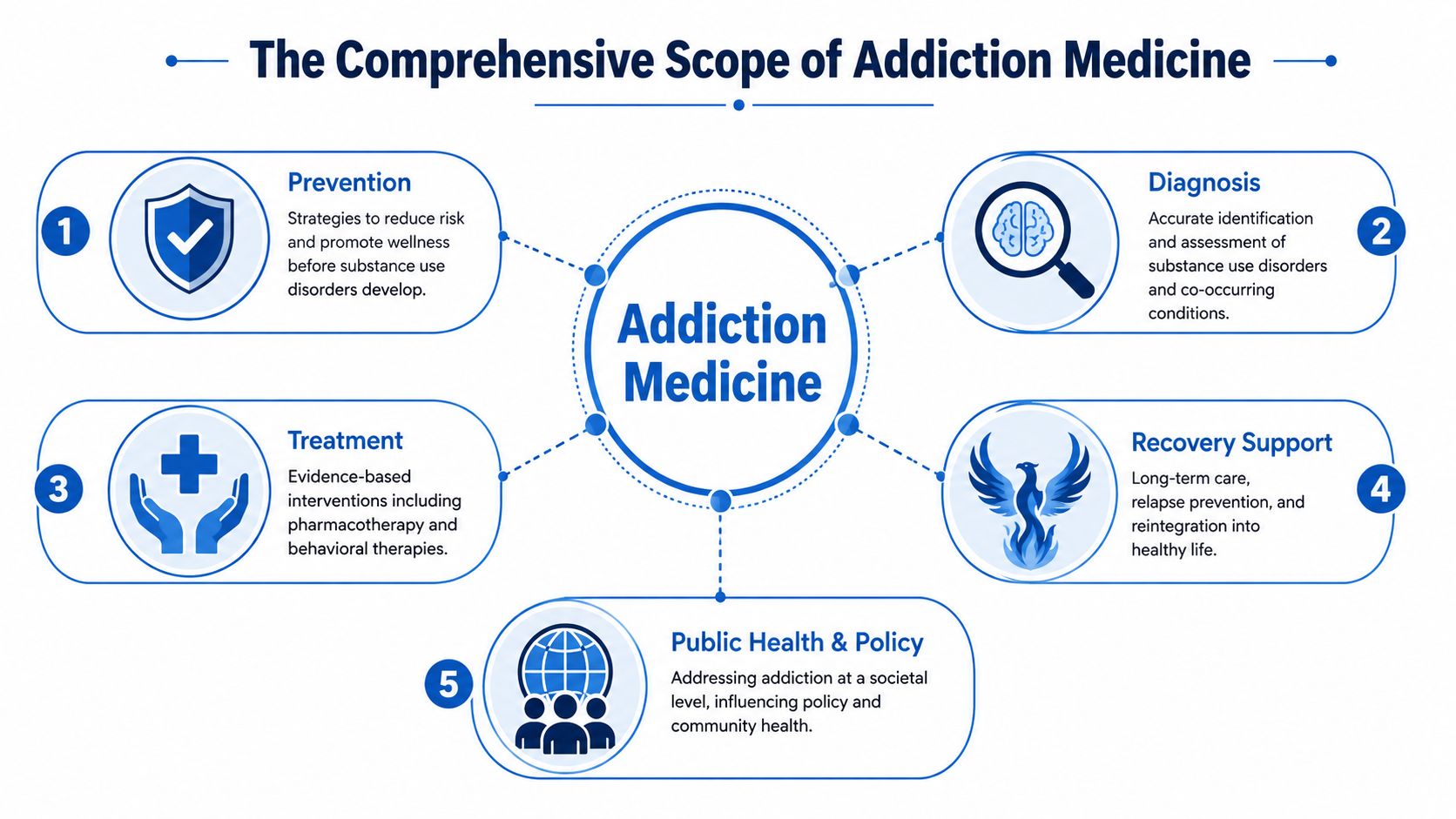
A simple way to think about it is this. Addiction medicine is chronic disease care applied to substance use. It isn't limited to one crisis visit or one medication decision. It covers the full arc, from early identification to long-term recovery support.
What clinicians actually learn
Strong addiction medicine training goes beyond awareness. It teaches clinical judgment.
That usually includes:
- Screening and diagnosis: how to assess substance use carefully and apply DSM-5 criteria in real cases
- Treatment selection: how to match a patient's presentation to behavioral treatment, medication treatment, referral, or a combination
- Withdrawal management: how to recognize severity and know when outpatient care is appropriate versus when a higher level of care is needed
- Follow-up planning: how to reduce relapse risk with ongoing monitoring and support
- Complication management: how to recognize co-occurring psychiatric and physical conditions that affect care
For example, a clinician treating opioid use disorder doesn't just need to know that medications exist. They need to understand who's an appropriate candidate, how to monitor response, how to address barriers to adherence, and when co-occurring illness changes the plan.
The hidden curriculum matters too
Many clinicians assume addiction training is mostly about pharmacology and diagnostic criteria. Those are important, but they're not the whole picture.
A peer-reviewed commentary on Addiction Consult Services argues that these services can “rewrite the hidden curriculum” by reducing stigma, teaching non-stigmatizing terminology, and helping learners identify bias during inpatient care, as discussed in this PMC commentary on Addiction Consult Services.
Bedside teaching often changes clinician behavior more effectively than a slide deck alone.
That's why good programs teach both knowledge and conduct. Learners need to know what to prescribe, but they also need to know how to speak, how to respond to ambivalence, and how to avoid turning a treatable condition into a moral judgment.
Exploring the Main Addiction Medicine Training Pathways
A hospitalist may want to start buprenorphine safely on Monday. A primary care physician may want stronger alcohol use disorder treatment skills without leaving practice for a year. An emergency clinician may need focused training that improves discharge planning and follow-up. All three are entering the same field through different doors.
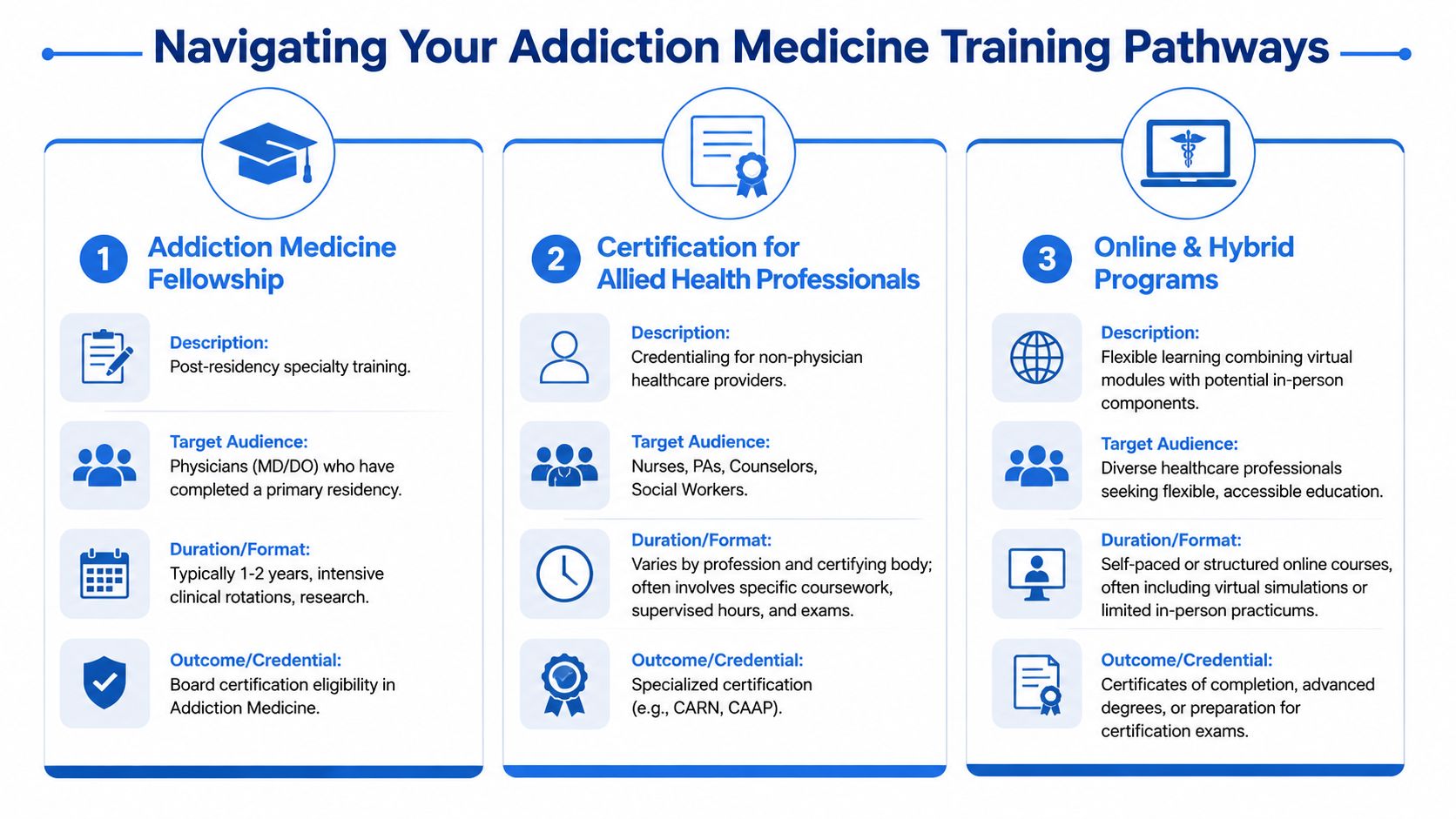
That variety is a strength. Addiction medicine developed from a more informal, experience-based model into a clearer training system with fellowships, profession-specific credentials, and accredited continuing education. The result is a ladder, not a single gate. Some clinicians climb to specialty practice. Others add targeted skills that immediately improve care in the setting where they already work.
Fellowship training
Fellowship is the most intensive route. It is built for physicians who want addiction medicine to become a major part of their professional identity and clinical work.
A good way to understand fellowship is to compare it with residency electives or short courses. An elective may teach recognition and first-line treatment. A fellowship teaches pattern recognition across hundreds of cases, management of complexity over time, and collaboration across services such as psychiatry, primary care, emergency medicine, and hospital consultation. That difference matters when patients have polysubstance use, unstable housing, pain, pregnancy, liver disease, or co-occurring psychiatric illness.
Expect fellowship training to emphasize:
- Complex clinical care: inpatient, outpatient, consultation, and longitudinal treatment
- Broad substance coverage: alcohol, opioids, stimulants, sedatives, nicotine, and polysubstance use
- Systems-based practice: coordination with behavioral health, pharmacy, social work, and public health
- Scholarly and teaching skills: quality improvement, program building, and education of other clinicians
For physicians who want advanced specialization, fellowship remains the clearest path.
Certification and profession-specific credentials
Many clinicians do not need a fellowship to practice better addiction care. Nurse practitioners, physician assistants, nurses, counselors, pharmacists, and social workers often need structured education that matches their scope of practice and patient population.
That distinction helps prevent a common misunderstanding. Training pathways in addiction medicine are not arranged in a simple hierarchy where one is “serious” and another is “lesser.” They serve different jobs. A counselor may need stronger skills in motivational interviewing and relapse prevention planning. A pharmacist may need focused training in medication management, drug interactions, and harm reduction counseling. A family physician may need enough depth to screen, diagnose, start treatment, and know when to refer.
Older certification models also show that continuing education has long been part of this field. Addiction medicine did not begin with a single all-or-nothing route. It grew through layered training, supervised experience, and formal coursework.
CME and CE for frontline practice
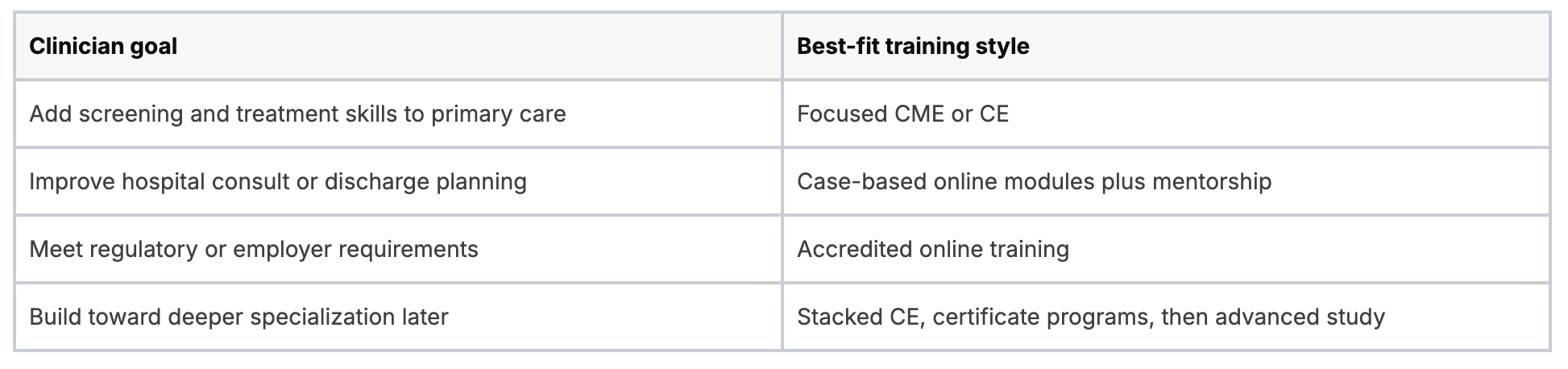
For many working clinicians, CME and CE are the most practical entry point because they fit real schedules and immediate patient needs. In that sense, they work like modular training blocks. You add the skill you need, apply it in clinic or on the ward, then build from there.
This path often fits clinicians who want to:
Online education deserves a clear place here. Many clinicians now begin with accredited digital coursework because it gives them access to updated teaching without travel barriers or schedule disruption. If you want a practical overview of how accredited digital learning works, this guide to continuing medical education online explains why the format has become a credible standard for busy professionals.
The best pathway is the one that matches the patients you see, the decisions you make, and the role you want to grow into.
The Power and Validity of Online Training
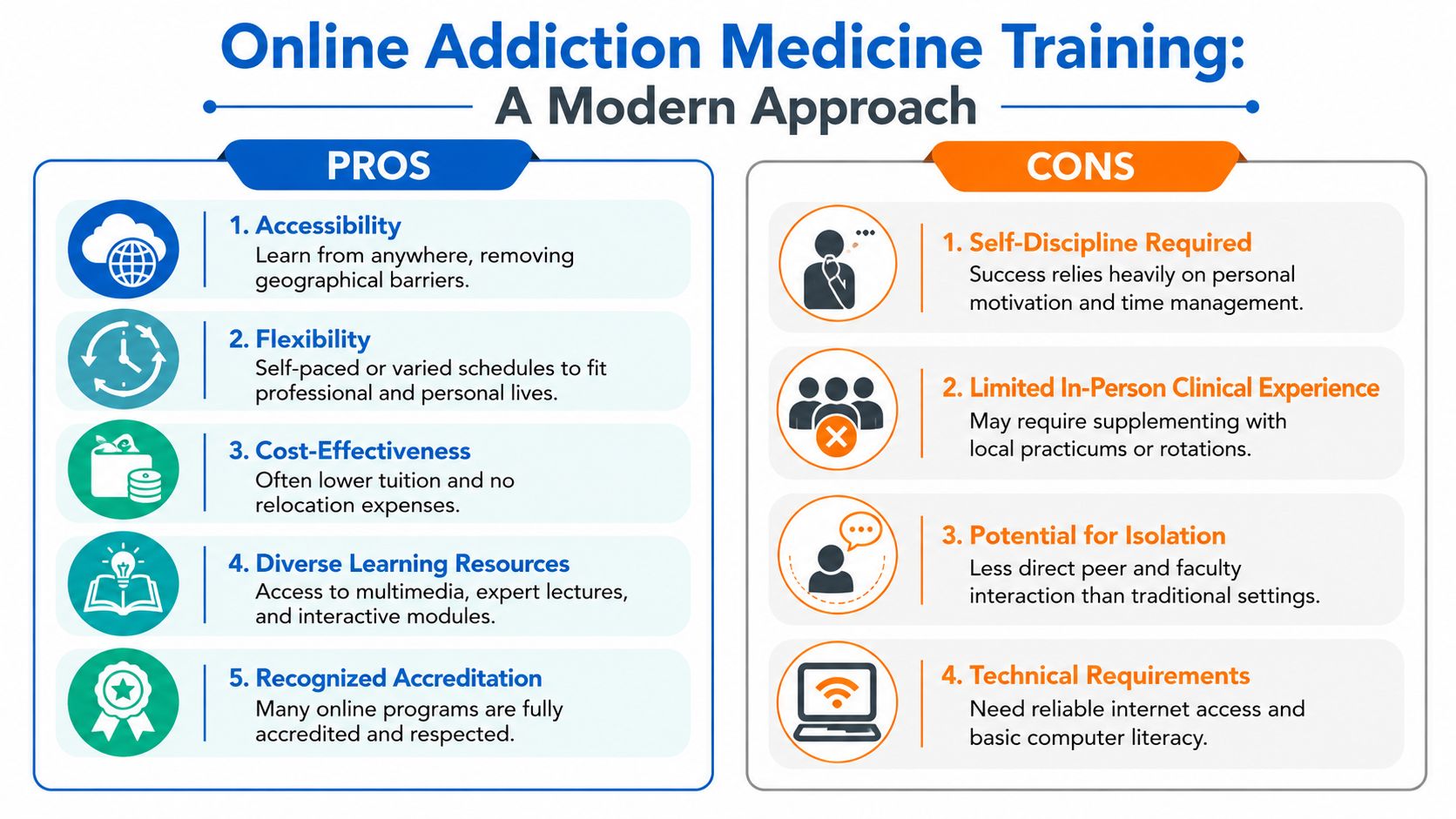
The old assumption that only in-person education is legitimate doesn't hold up well in modern healthcare. For addiction medicine training, especially CE, CME, and certification preparation, online learning is a valid and increasingly practical format.
That doesn't mean every online course is good. Quality still depends on accreditation, curriculum, faculty design, and clinical relevance. But the format itself is not the problem. In many cases, it's the reason busy clinicians can complete the training at all.
Why online learning fits this field
A systematic review found that addiction medicine training varies widely across countries and settings, and identified barriers such as limited curricular time, weak coordination, too few qualified faculty, and inadequate treatment facilities for clinical placement.
That point is especially important. In addiction medicine, sitting in a room for a set number of hours doesn't automatically produce readiness. A strong online program can standardize key content across learners and make essential topics easier to access.
What online training does well
Online education is especially strong when the learning goal is knowledge, decision-making, and practice integration.
It works well for:
- Core concepts: DSM-5 diagnosis, medication basics, relapse prevention, and co-occurring conditions
- Regulatory education: mandated training and recurring CE or CME
- Case-based learning: branching scenarios, clinical reasoning modules, and self-assessment
- Schedule flexibility: learning before clinic, after shifts, or over several short sessions
If you want a broader look at how accredited digital education fits professional requirements, this guide to online continuing medical education is a useful starting point.
Bottom line: Online addiction medicine training is not a lesser option for CE and CME. For many clinicians, it's the most realistic path to consistent, high-quality education.
What online training doesn't replace
A balanced view matters. Online learning doesn't replace every form of hands-on clinical exposure. Learners still benefit from mentoring, supervised practice, local referral knowledge, and interdisciplinary collaboration.
That said, people frequently get confused. They assume that because some parts of addiction care are relationship-based, all meaningful training must happen in person. That's too simplistic. The better approach is blended thinking.
Use online education for structured knowledge and case-based reasoning. Add local clinical experience where your role requires it.
Understanding Certification and Federal Mandates
Many clinicians first look into addiction medicine training because they've heard about a federal requirement and want to know what applies to them.
The most important current example is the MATE Act. The Consolidated Appropriations Act of 2023 created a one-time training requirement on December 29, 2022, and it took effect on June 27, 2023, requiring every DEA-registered practitioner except veterinarians to complete eight hours of training on the treatment and management of patients with opioid or other substance use disorders.
What the MATE Act does and does not do
This requirement sets a baseline. It does not make someone an addiction specialist. It means prescribers need foundational education in treating substance use disorders.
The public health context helps explain why. The same source notes that one report cited 54.2 million people age 12 and older needing substance abuse treatment in 2023, and another found 52.6 million people age 12 and older needed treatment in 2024, while only 23% received it. That's a large mismatch between need and available care.
For many readers, the practical takeaway is simple:
- If you hold a DEA registration: you likely need to verify compliance with this one-time education requirement
- If you already completed eligible training: you may already meet it
- If you want deeper expertise: the MATE Act is the floor, not the ceiling
How this differs from certification
Formal certification signals a different level of commitment. It reflects deeper study, broader scope, and a more advanced professional identity.
ASAM describes addiction medicine as a subspecialty focused on prevention, evaluation, diagnosis, treatment, and recovery, with certified specialists expected to provide screening, intervention, treatment, and recognition of psychiatric and physical complications. That's much broader than a one-time mandated course.
If you're sorting out general professional requirements beyond addiction-specific content, this resource on continuing education for physicians can help clarify how mandatory education fits into the bigger CME picture.
Federal training requirements establish minimum readiness. Certification and ongoing CME build real clinical depth.
How to Choose the Right Training Program for You
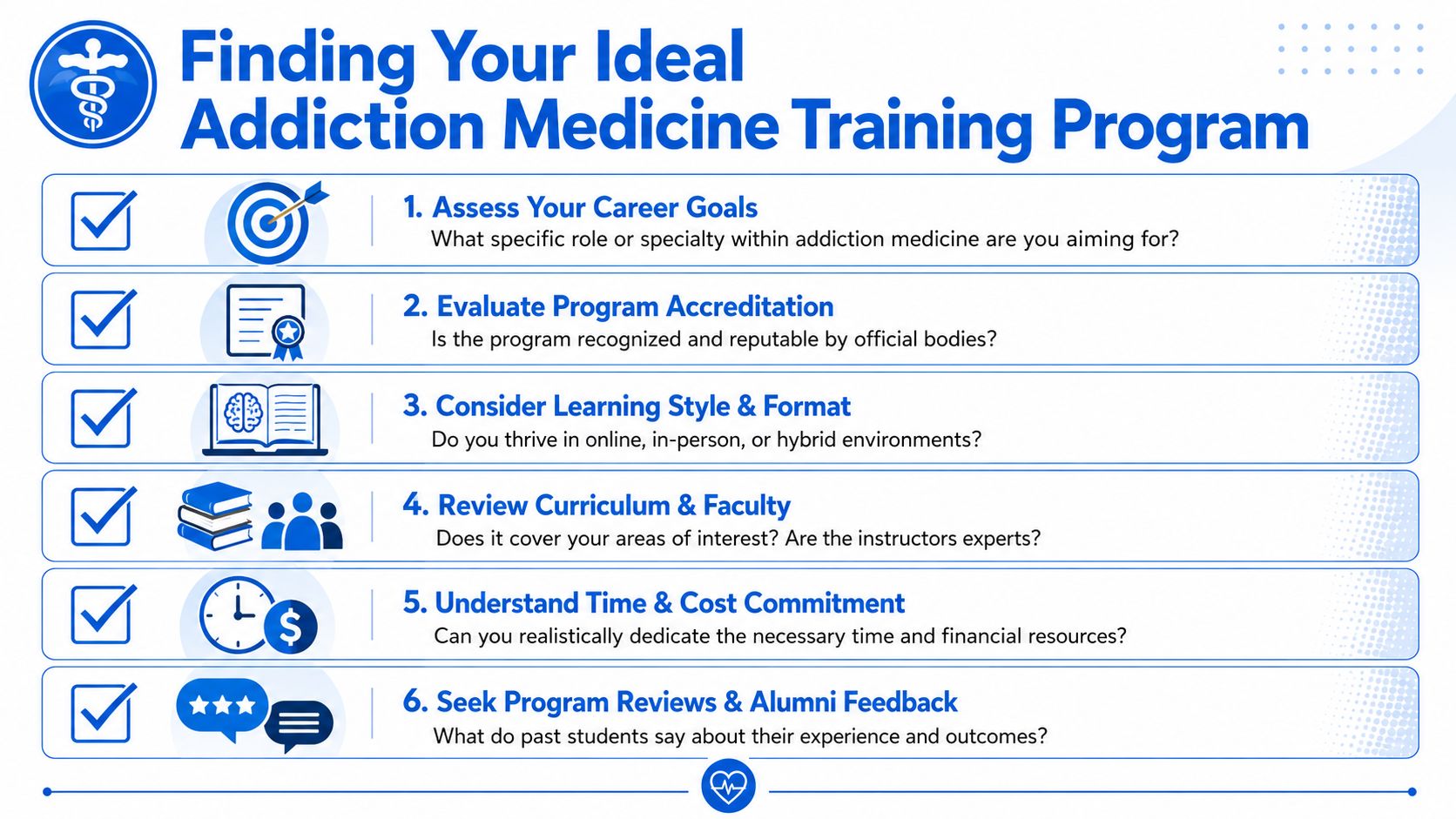
Choosing an addiction medicine training program is a lot like choosing a treatment plan. The best option depends on the person in front of you. In this case, that person is you.
A hospitalist who wants better inpatient consult skills needs something different from a family physician building office-based treatment capacity. A nurse meeting CE requirements needs something different from a physician considering future specialization.
Start with your real clinical goal
Don't begin by asking which program looks most prestigious. Start by asking what problem you want the training to solve.
Here are good goal-setting questions:
- Do you want specialty depth or everyday competence? Fellowship-level ambition is different from wanting to manage common cases more confidently.
- Will you prescribe, refer, consult, or coordinate? Your clinical role should shape the curriculum you prioritize.
- Are you solving for compliance or for practice change? Those are related, but they're not the same.
A useful answer might sound like this: “I'm a primary care clinician and I need to diagnose substance use disorders more confidently, understand medication options, and improve follow-up.” That answer points you toward practical, case-based education instead of a broad academic program.
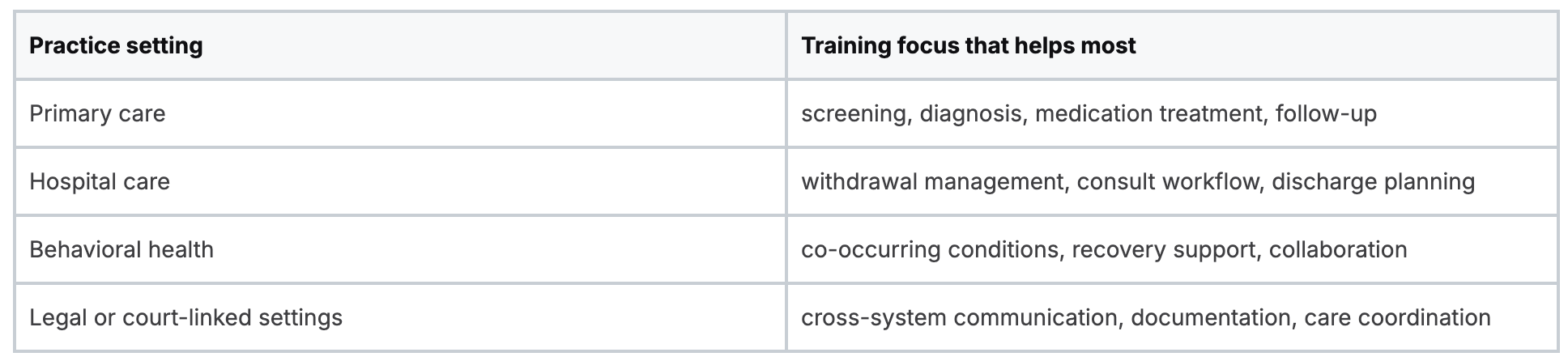
Match the training to your setting
Training should fit the environment where you work. That's becoming more important as addiction care expands beyond traditional specialty spaces.
That trend matters because addiction care now intersects with:
Review the curriculum, not just the marketing
A strong program should cover clinical decisions, not just broad concepts. Look for content on screening, diagnosis, withdrawal management, pharmacotherapy, relapse prevention, and co-occurring conditions.
You should also ask whether the program teaches how to address stigma, local resources, and referral pathways. Those topics often determine whether knowledge changes care.
For a practical checklist on evaluating provider quality, this guide on how to choose the best online medical certification provider is worth reviewing.
Good training changes what you do on Monday morning, not just what you can recall on a quiz.
Don't undervalue online format
Some clinicians still hesitate because they assume employers prefer in-person coursework. In many cases, what matters most is whether the education is accredited, relevant, and clearly documented.
Online training also gives you real advantages:
- Scheduling freedom: you can learn around shifts and family responsibilities
- Consistent delivery: every learner gets the same core material
- Easier review: you can revisit difficult topics instead of losing them after a live lecture
- Wider access: you're not limited to whatever happens to be offered locally
The best program is the one you can complete, apply, and trust.
Take the Next Step in Your Medical Career
Addiction medicine training has become more important, more structured, and more accessible. Whether you're trying to meet a federal requirement, improve care in your current role, or move toward deeper specialization, there's a credible path available.
The key is to choose training that matches your practice. Some clinicians need fellowship-level depth. Many need targeted CE or CME that improves screening, treatment decisions, and follow-up. For a large part of the healthcare workforce, online education is the most practical way to get there.
That matters because valid training shouldn't depend on travel schedules, local faculty availability, or whether you can step away from work for a live course. Accredited online learning gives clinicians a realistic way to build skill, document completion, and keep moving forward.
If you've been waiting until you had more time, more clarity, or the “perfect” pathway, this is a good moment to start with the next useful step instead.
If you're ready to build practical skills through flexible, accredited online education, explore ProMed Certifications. ProMed offers online CE and CME options designed for busy healthcare professionals, including addiction-related education and DEA training, with a format that's convenient, credible, and built for real-world clinical schedules.
.avif)
Stay compliant with ProMed+
Certifications included: ACLS, BLS, PALS, CPR & Neonatal Resuscitation
Unlimited continuing education: over 200 hours of accredited CME
All-inclusive: One price. No surprises.
Get certified today

The Advanced Cardiac Life Support (ACLS) is an accredited online medical certification course that teaches medical professionals to respond to nearly all cardiopulmonary emergencies.

The Pediatric Advanced Life Support (PALS) Recertification instructs medical professionals on performing pediatric cardiopulmonary resuscitation in emergencies.

The Basic Life Support (BLS) Recertification is intended to teach healthcare professionals the basic steps of CPR and rescue breathing for adults, children, and infants.

Our online medical certification course for CPR, Automated External Defibrillator (AED), and First Aid is designed to teach adult, child, and infant CPR and AED use.

The Neonatal Resuscitation Certification trains medical professionals in performing resuscitation procedures and life-saving techniques for newborns at the time of delivery.

.png)
.png)
.png)