


What Is PALS Certification For Nurses? Your 2026 Guide
If you’re a nurse who works with children, you know how quickly a situation can turn critical. One minute, a child seems stable; the next, they're in distress. This guide will explain how PALS certification, which stands for Pediatric Advanced Life Support, prepares you to take charge during those high-stakes moments.
Think of it as the next level beyond basic life support, specifically designed for the unique challenges of treating infants and children. PALS is a critical component of pediatric emergency care, and getting certified gives you the skills and confidence to be the calm, decisive leader when a young patient's life is on the line.
What is PALS Certification?
So, what exactly does getting PALS certified involve? It’s an advanced course that teaches a systematic way to assess, manage, and treat critically ill pediatric patients. Unlike basic CPR, PALS dives deep into the distinct physiology of children and the specific interventions they need.
The training gives you a reliable framework for spotting a child at risk of cardiopulmonary arrest before it happens. More importantly, it empowers you to act swiftly and correctly, which can make all the difference in patient outcomes. For a quick overview of what PALS certification entails, check out this table.
PALS Certification At A Glance

This summary just scratches the surface of what makes PALS such a valuable credential for any nurse working with pediatric patients.
The Core of PALS Training
At its heart, PALS is about building a repeatable, high-level skill set. Developed by the American Heart Association (AHA), the curriculum is all about structured assessment and intervention for kids facing events like cardiac arrest or shock.
You’ll get hands-on with key topics, including:
- Systematic Pediatric Assessment:
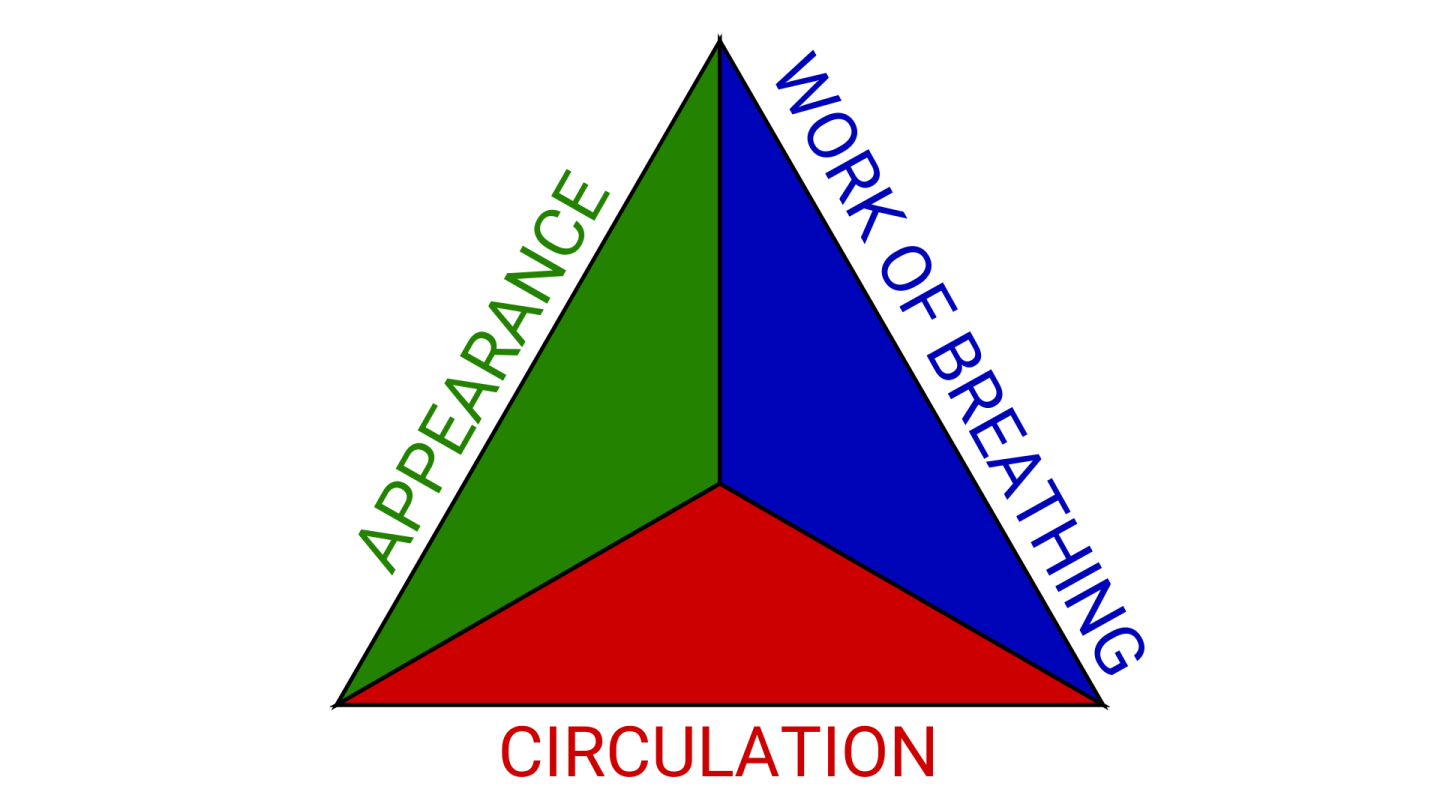
- This is where you learn to use tools like the Pediatric Assessment Triangle (PAT) to rapidly size up a child's condition from across the room.
- Respiratory Distress Management:
- You'll master techniques for handling everything from common breathing problems to severe respiratory failure in children.
- Pharmacology:
- This isn't just about knowing the drugs; it's about calculating and administering the correct doses for tiny bodies under immense stress.
- Team Dynamics:
- PALS teaches you how to lead a resuscitation team, communicate clearly, and ensure everyone works together seamlessly when every second counts.
While PALS is a specialized credential, it builds on the foundational knowledge every nurse needs. Many nurses first pass their licensure exam, like the NCLEX-RN, before diving into advanced certifications like this.
In essence, PALS isn't just another certificate to hang on the wall. It’s a set of life-saving skills that provides the confidence and competence needed to manage the most fragile patients during their most critical moments.
Who Needs PALS Certification and Where Is It Required?
While any nurse who works with kids can benefit from having PALS skills in their back pocket, for certain roles, it’s simply non-negotiable. If your job puts you in a high-acuity environment where a pediatric emergency could happen at any moment, this certification is almost certainly for you. It's the gold standard for professionals who must be ready to handle the most serious medical crises involving infants and children.
Think of PALS as a key that unlocks specialized, often higher-paying, career paths. Holding this credential makes you a much more attractive candidate and opens doors to roles that demand a higher level of expertise and responsibility. It’s a clear signal to employers that you have the validated skills to manage a pediatric crisis with confidence and competence.
Key Roles Requiring PALS
Many hospitals and healthcare facilities mandate PALS certification for nurses working in specific, high-stakes departments. If you’re aiming for a career in any of these areas, getting certified isn't just a good idea—it's a critical step.
- Pediatric ICU (PICU) Nurses:
- These pros are on the front lines, caring for the most critically ill children. PALS knowledge is absolutely essential here.
- Emergency Room (ER) Nurses:
- ER nurses have to be ready for anyone who walks (or is carried) through the door, including children in severe distress.
- Pediatric Anesthesia and Sedation Nurses:
- When you're administering anesthesia or sedation to a child, you need advanced skills to manage potential airway and cardiac complications.
- Flight Nurses and Transport Teams:
- Moving critically ill pediatric patients between facilities is a high-pressure job where PALS skills are vital for providing care in transit.
PALS is also a major advantage for school nurses, urgent care staff, and nurses in family practices. While not always required, it shows you're committed to being fully prepared for a pediatric emergency and providing the highest standard of care for your young patients.
What Core Skills Will I Master in a PALS Course?
When you enroll in a PALS course, you aren’t just memorizing a bunch of steps. You're learning a systematic way to handle pediatric emergencies. Think of the PALS algorithm like a clinical GPS—it gives you a clear, step-by-step map to follow during the chaotic first minutes of a crisis, making sure no critical detail is overlooked.
This training gives you practical skills that make a real difference in patient care. The advanced abilities you gain in a PALS course directly improve a nurse's capacity to deliver safe and effective pediatric care. This has a massive impact on how to prevent medical errors and ultimately leads to better patient outcomes. You'll build the expertise to make life-saving calls when the pressure is on.
What You Will Learn
A solid PALS course breaks down overwhelming emergency scenarios into modules you can actually digest. You’ll start with the basics, like assessment, and gradually build up to more advanced interventions.
Key skills you will master include:
- The Pediatric Assessment Triangle (PAT): This is your tool for a rapid, "from-the-doorway" assessment. You’ll learn to quickly evaluate a child's appearance, work of breathing, and skin circulation to spot a sick child fast and know what to do first.
- Managing Respiratory Distress and Failure: You'll become skilled at recognizing the often-subtle signs of impending respiratory failure in kids. The course covers everything from airway management and oxygen delivery to proper ventilation techniques.
- Recognizing and Managing Shock: This section dives into the different types of shock seen in children—hypovolemic, distributive, cardiogenic, and obstructive—and, more importantly, the specific treatments for each one.
- Effective Resuscitation and Team Dynamics: PALS isn't a solo sport; it's all about teamwork. You’ll practice leading a resuscitation team, communicating clearly, and delegating tasks so the response is smooth and organized.
This structured approach ensures you’re not just reacting to an emergency but are proactively managing it with a proven, evidence-based strategy. The whole point is to build both your confidence and your competence.
You'll also cover other vital topics like vascular access, defibrillation, and post-resuscitation care. To make sure you're ready for the exam, try taking our free PALS practice test to see how you're doing.
Choosing Your Path: Online vs. In-Person PALS Training
When it's time to get your PALS certification, you'll find yourself at a fork in the road: a traditional, in-person class or a modern online course. For a long time, the outdated belief persisted that only in-person training from the AHA or American Red Cross was valid. We’re here to confidently state that this is no longer the case.
The reality is, the healthcare world is evolving. Hospitals, clinics, and healthcare systems are increasingly recognizing that well-designed online courses provide an education that is just as effective as in-person formats. The focus is rightly shifting from where you learn to the quality of that education and how well you can apply it.
Online Learning is Just as Effective—And Often Better
Numerous peer-reviewed studies and industry articles have confirmed that online learning can be equally as good as—and in some cases, even superior to—a traditional classroom. For a busy nurse juggling 12-hour shifts and family life, the flexibility of online learning is a game-changer. You can study on your lunch break or after the kids are in bed, without burning gas to commute or blocking off an entire weekend.
This self-paced style often improves knowledge retention. Instead of being rushed through complex topics like PALS algorithms in a single day, you can take your time to truly absorb and master the material.
The growing consensus is clear: a well-designed online course delivers the same level of expertise and improves patient care outcomes just as effectively as its in-person counterpart. The key is choosing an accredited provider committed to quality and aligned with the latest AHA guidelines.
At ProMed Certifications, our courses are built on this very principle. We offer a convenient, credible, and future-focused path to certification that fits the practical realities of a modern nursing career.
Comparing Online vs. In-Person PALS Certification
To help you figure out the best fit for your life and learning style, it helps to see the options side-by-side. Here’s a quick breakdown of what you can expect from both online and traditional PALS training.
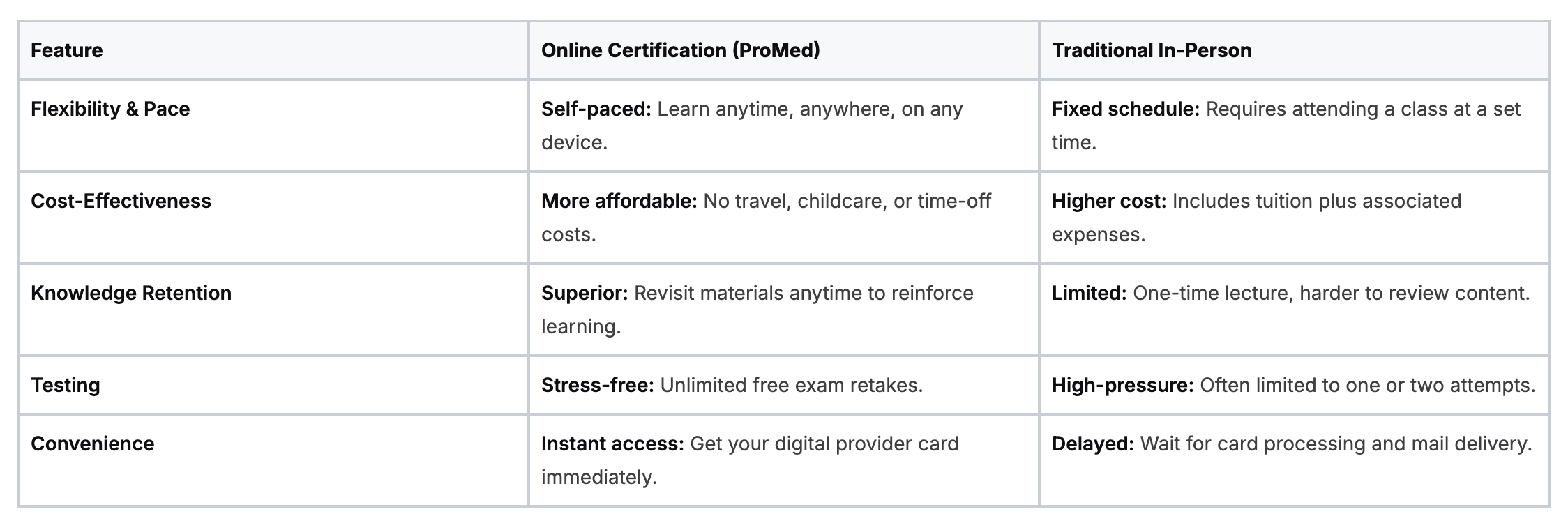
Ultimately, both paths lead to the same goal: earning your certification. The right choice really comes down to what works for you, your schedule, and your budget. But for today's nurses, accredited online providers like ProMed Certifications offer a modern, efficient, and equally valid route to gaining the critical skills you need to excel in pediatric emergency care.
How to Get Your PALS Certification Online with ProMed
Ready to get certified? Earning your PALS certification with ProMed is a straightforward process designed for the hectic schedules of healthcare professionals. We know your time is valuable, so we've built a simple, five-step path to get you the credentials you need without the usual hassle.
We've designed our platform to put you in the driver's seat. It's all about giving you control, letting you master critical skills when and where it works for you.
Your Simple Path to Certification
Getting started is easy and only takes a few minutes. Here’s a quick look at how our system works:
- Create Your Account: The first step is a simple registration on our secure platform.
- Access Study Materials: Once you're in, you get immediate access to our full library of comprehensive training content, all based on the latest AHA guidelines.
- Study At Your Pace: This is where the flexibility really kicks in. Learn anytime, anywhere, and on any device. Our materials are available 24/7, so you can easily fit studying in around your shifts.
- Take The Exam: When you feel ready, take the exam with confidence. We offer unlimited free exam retakes because our goal is to see you succeed, not to add more pressure.
- Get Your Digital Card Instantly: As soon as you pass, your digital provider card is ready for immediate download and printing. No waiting.
This flowchart shows just how different a modern, flexible online approach is compared to the more rigid structure of traditional classroom settings.
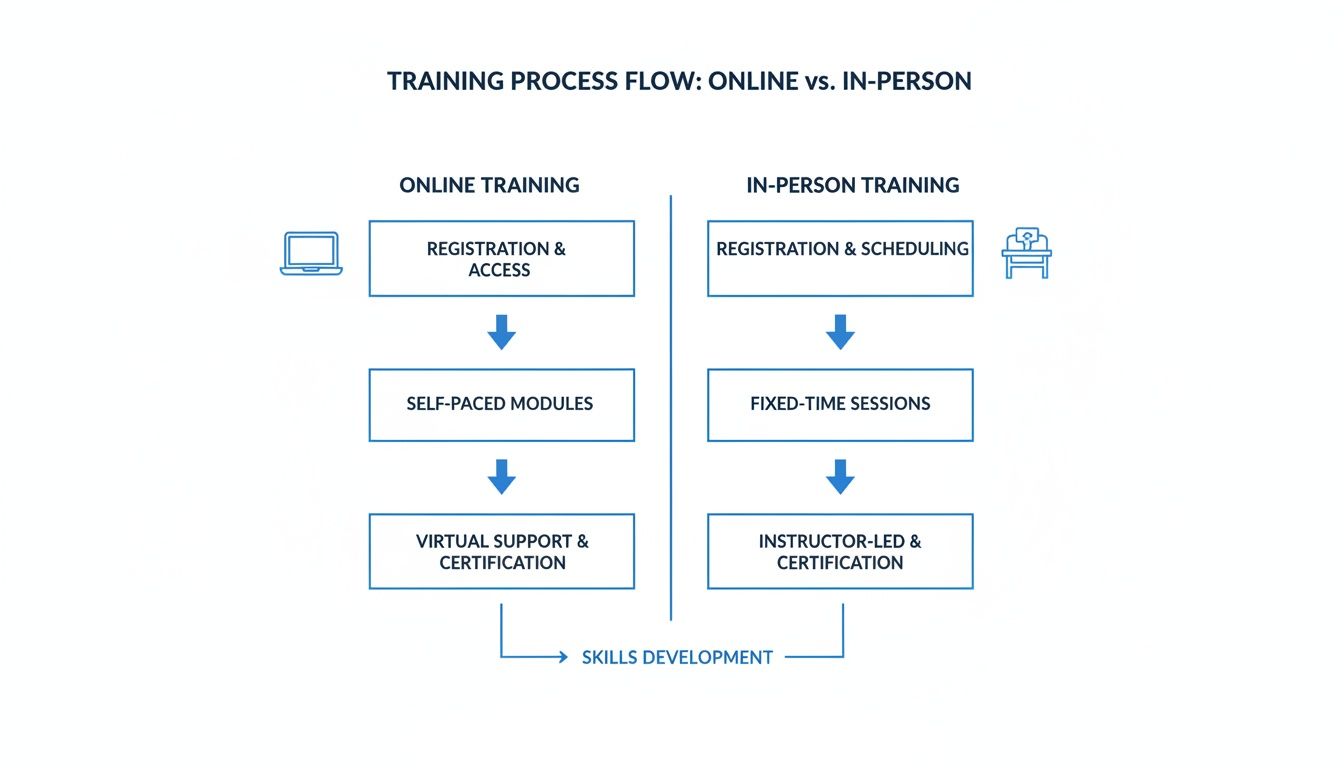
As you can see, online certification offers a much more direct and self-directed path. In-person training, on the other hand, involves a lot more logistical steps and scheduling headaches.
We’re so confident in the quality of our program that we offer an employer acceptance guarantee. This removes a major hurdle for many nurses, giving you peace of mind that your certification will be recognized and respected.
To get started on your own PALS journey, you can enroll in your PALS certification course today and see just how simple it can be to advance your skills.
Answering Your PALS Certification Questions
Got questions about PALS certification? You're not alone. We’re here to tackle some of the most common ones so you can get a clear picture of what it's all about and why it matters for your nursing career.
Is PALS the Same as ACLS or BLS?
Not at all—they're distinct certifications for very different patient groups. Think of it like this: Basic Life Support (BLS) is the essential foundation for everyone, the A-B-Cs of emergency care. Advanced Cardiac Life Support (ACLS) then builds on that for adult patients.
Pediatric Advanced Life Support (PALS), however, is a whole different ballgame. It's tailored specifically to the unique physiology of infants and children. Kids aren't just tiny adults, and PALS equips you with the specialized knowledge to handle their emergencies effectively.
How Long Is a PALS Certification Valid?
Your PALS certification is good for two years from the day you pass the exam. Before it expires, you'll need to complete a recertification course to keep your credentials active.
Thankfully, you don't have to sacrifice a whole day off for a stuffy classroom anymore. Online recertification has made this process incredibly straightforward, letting you refresh your skills quickly and on your own schedule.
Will My Employer Accept an Online PALS Certification?
This is a huge concern for many nurses, and understandably so. But the old belief that only in-person AHA or Red Cross classes are legitimate is quickly becoming a thing of the past. High-quality, accredited online certifications, like the ones we offer at ProMed, are now widely accepted by hospitals and healthcare systems nationwide as they recognize online formats are equally effective.
The consensus is clear: a well-designed online course based on current AHA guidelines provides the same critical knowledge and contributes to better patient outcomes just as effectively as a traditional class.
We stand by our program so strongly that we provide a 100% money-back guarantee. If your employer doesn't accept your ProMed certification for any reason, you get a full refund. This takes all the risk off your shoulders so you can just focus on learning.
How Can PALS Impact My Career?
Having PALS on your resume does more than just check a box—it can be a serious career catalyst. It signals to employers that you have a high level of expertise and are committed to excellence in pediatric care.
This makes you a much stronger candidate for specialized roles in the PICU, pediatric ER, or other high-acuity units. In turn, that specialized skillset often leads to greater job security and opens the door to higher-paying positions that are simply out of reach for nurses without it.
This guide should lay the framework for understanding PALS and its importance for your career. Ready to sharpen your pediatric skills and give your career a boost? At ProMed Certifications, we make getting certified simple and stress-free. Enroll in your PALS certification course today and build the confidence to manage any pediatric emergency that comes your way.
.avif)
Stay compliant with ProMed+
Certifications included: ACLS, BLS, PALS, CPR & Neonatal Resuscitation
Unlimited continuing education: over 200 hours of accredited CME
All-inclusive: One price. No surprises.
Get certified today

The Advanced Cardiac Life Support (ACLS) is an accredited online medical certification course that teaches medical professionals to respond to nearly all cardiopulmonary emergencies.

The Pediatric Advanced Life Support (PALS) Recertification instructs medical professionals on performing pediatric cardiopulmonary resuscitation in emergencies.

The Basic Life Support (BLS) Recertification is intended to teach healthcare professionals the basic steps of CPR and rescue breathing for adults, children, and infants.

Our online medical certification course for CPR, Automated External Defibrillator (AED), and First Aid is designed to teach adult, child, and infant CPR and AED use.

The Neonatal Resuscitation Certification trains medical professionals in performing resuscitation procedures and life-saving techniques for newborns at the time of delivery.

.png)
.png)
.png)