


Practice Exam Questions: Your Path to Certification
.png)
You're probably staring at a stack of notes, a question bank, and a looming exam date, wondering if you're ready or just busy. That's the exact moment where practice exam questions stop being a study accessory and become the thing that tells you whether your knowledge holds up under pressure. For healthcare professionals, that difference matters because certification is never just about what you know, it's about what you can retrieve cleanly, quickly, and with judgment when the clock is running.
Online learning fits that reality. A 2018 JAMA meta-analysis found internet-based learning improved knowledge and skills versus no intervention and was generally comparable to traditional learning for knowledge acquisition, while a 2020 systematic review of e-learning for health professionals found it was often as effective as or better than no intervention and could improve flexibility and access for clinicians and trainees. That's why the old idea that only in-person classes count, or that only AHA or Red Cross classrooms are valid, doesn't match where healthcare education is now. Accredited online CE and certification formats are being recognized more broadly, and the core question has shifted from “online or in person?” to “does this training mirror the exam and the job well enough to matter?”
Why Practice Exam Questions Separate Passers from Test-Takers
A nurse may know the ACLS algorithm well, then stall when the wording changes. A respiratory therapist may remember the definitions, then lose time because the stem demands a decision under pressure. Practice exam questions expose that gap between recognition and performance, and that is where many prepared candidates still come up short.
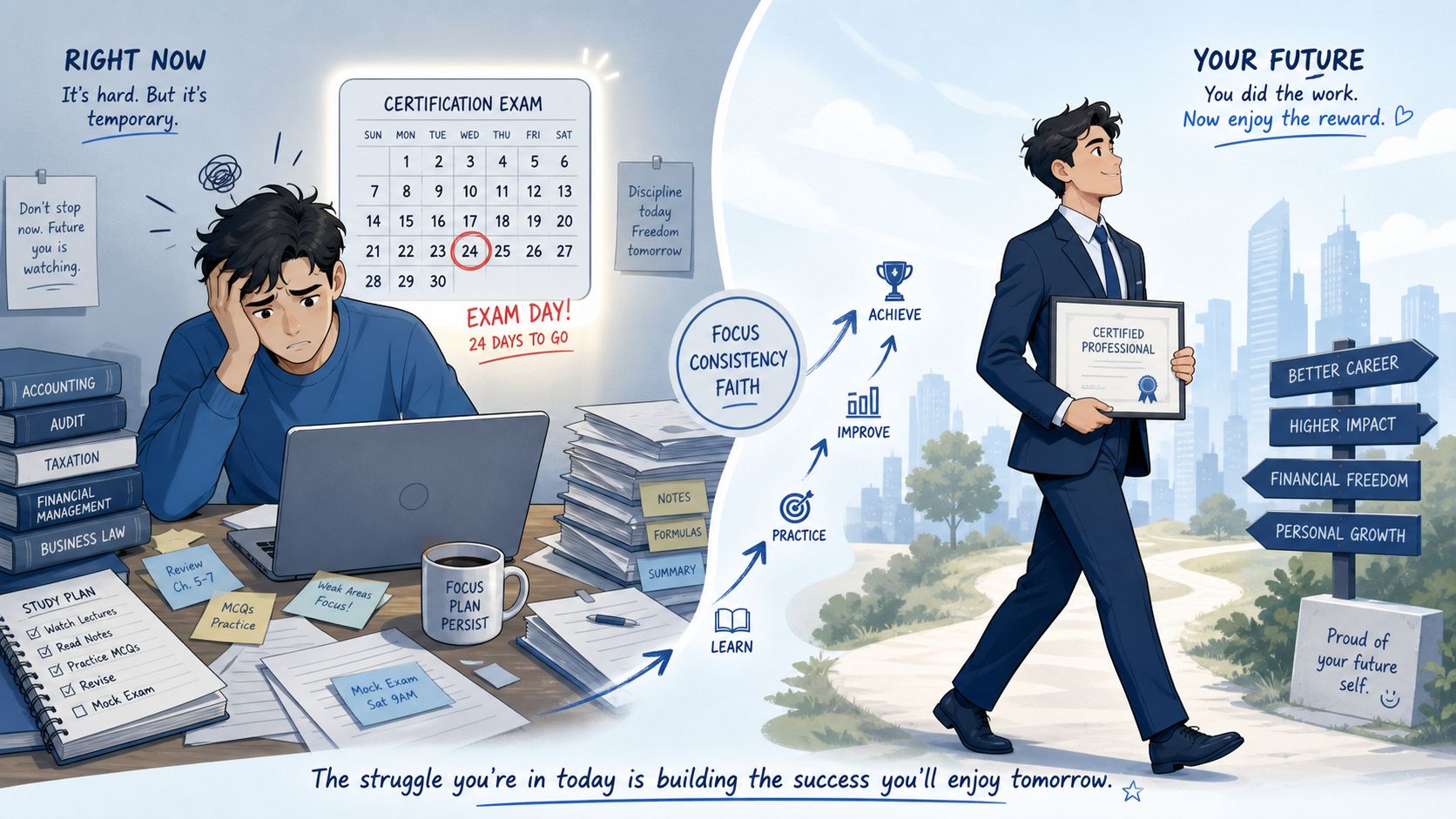
Studying content is not the same as performing
Textbook review builds familiarity. Questions build retrieval. That difference explains why timed question work feels harder than rereading, while also preparing you more closely for what test day demands.
Practical rule: If you can explain a topic but cannot answer it quickly under exam conditions, your preparation is still incomplete.
Formal exam programs have long used practice materials to mirror actual testing. The College Board's AP Statistics practice exam materials show how structured questions, scoring guidelines, sample responses, and scoring distributions can turn practice into a controlled rehearsal instead of casual review. Healthcare exam prep follows the same logic. The value is not just in seeing more items, it is in seeing items that behave like the actual exam.
Deliberate practice beats passive exposure. Candidates who keep that standard in view tend to study with more purpose and show up with a clearer sense of what they can do under pressure.
Online preparation fits the way healthcare people actually study
Healthcare professionals rarely have clean blocks of free time. They study between shifts, during commutes, and late at night after documentation, family obligations, or call. Online practice questions fit that reality better than rigid, location-bound prep, and digital learning guidance supports that format for knowledge outcomes and flexibility.
The point is not that every online question bank is strong. The point is that the format itself is valid, scalable, and well suited to certification prep when the questions are built well.
A good certification question set should also fit into a broader study plan. The same practical habits described in how to prepare for your medical certification exam apply here, because question work only pays off when it is chosen carefully, timed realistically, and reviewed with discipline.
Choosing Practice Questions That Prepare You
Good question banks do three things well. They match the exam blueprint, they explain why each answer is right or wrong, and they force retrieval instead of passive recognition. Anything less can keep you occupied without making you better.
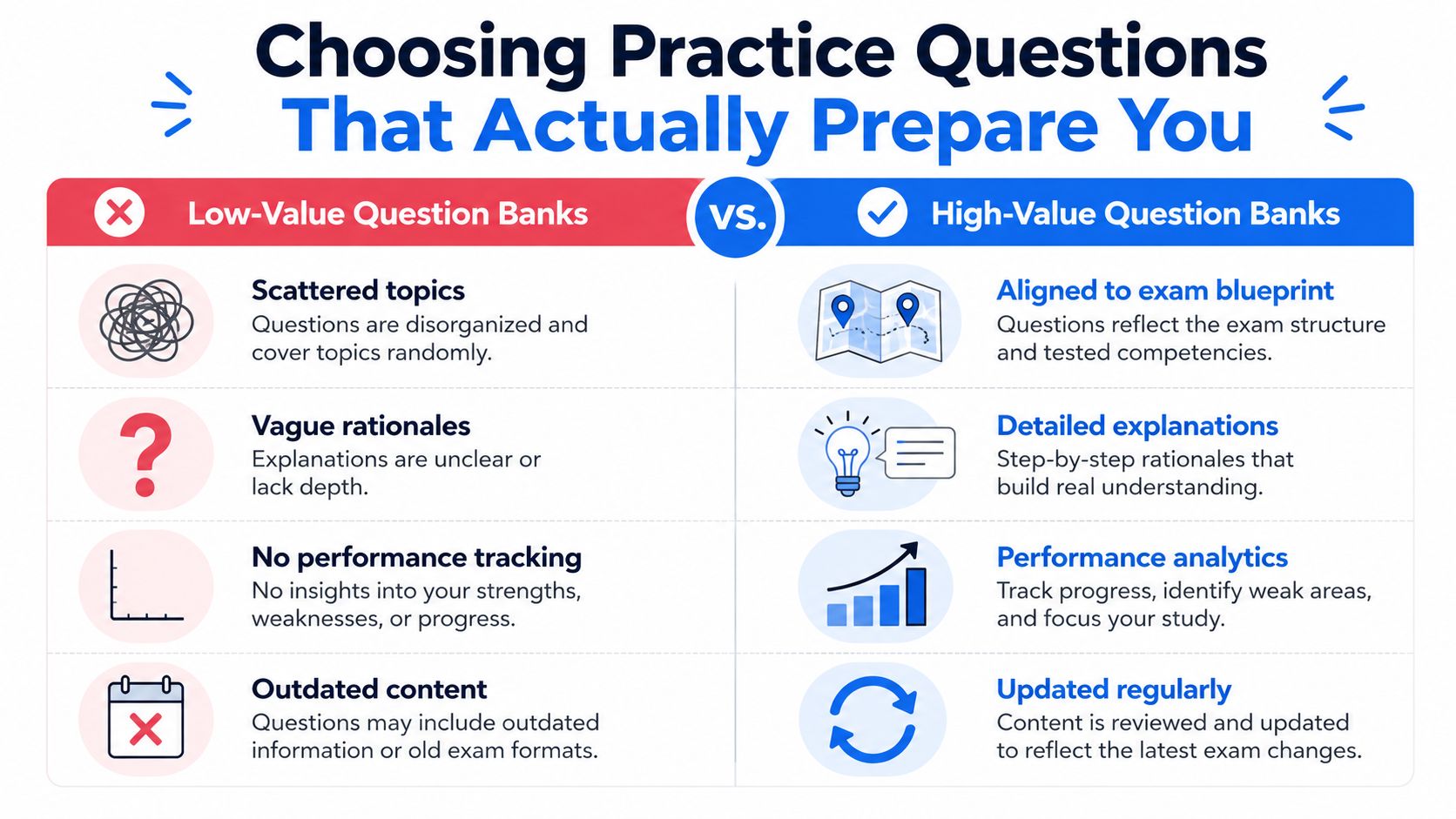
What to look for before you commit time
A high-value set should feel like the exam in structure and thinking style. It should not just ask, “What is the definition?” It should ask, “Given these findings, what do you do next?” That is the level where many candidates find out whether they know the material or only recognize it when it is wrapped in familiar wording.
Before you invest hours in any bank, check for these features:
- Blueprint alignment: Questions should reflect the tested domains, not random facts pulled from a textbook.
- Detailed rationales: Every answer choice should teach you something, not just reveal the correct option.
- Performance tracking: You should be able to see weak topics, not only a total score.
- Updated content: Outdated items can train you on the wrong standards.
The National Association of Boards of Pharmacy describes practice exams as a way to build familiarity with test format, question style, and timing, while also emphasizing that the practice version can differ from the actual exam in length and delivery. That distinction matters. A bank can still be useful even if it is shorter than the actual test, but it needs to be representative enough to train judgment.
Retrieval-practice research supports the same idea. In a large medical student cohort, the number of practice questions completed predicted better Step 1 performance, while more video watching was negatively correlated with score. That does not mean videos are useless. It means questions should lead your study, not sit beside it as decoration.
A question bank should change how you think, not just how many boxes you tick.
For healthcare learners who need a clear benchmark for exam readiness, the study habits described in how to prepare for your medical certification exam fit the same disciplined approach. Question work pays off when it is chosen carefully, timed realistically, and reviewed with discipline.
Selection matters in the content itself, too. The strongest banks give you enough pressure to reveal weak reasoning without wasting time on trivia. If you are comparing options for medical school or board prep, the Ace Med Boards exam resources are a useful example of the kind of organized question support many learners look for when they want structure, explanations, and repeated exposure to exam-style thinking.
For a practical example in the certification space, ACLS Certification is one online option that reflects the kind of flexible access many busy clinicians now expect. ProMed Certifications offers a quick and convenient way to get ACLS-certified, and the course can be taken anywhere on a busy schedule, which is exactly why online access has become so important for working clinicians.
Simulating Real Exam Conditions with Practice Questions
A question bank can still mislead you if you use it casually. Skimming a stem while checking your phone, stopping for snacks, or looking up answers halfway through trains the wrong habits. Real preparation means building a setting that demands the same focus you will need on exam day, and that often starts with cleaner focus for test preparation rather than artificial stimulation.
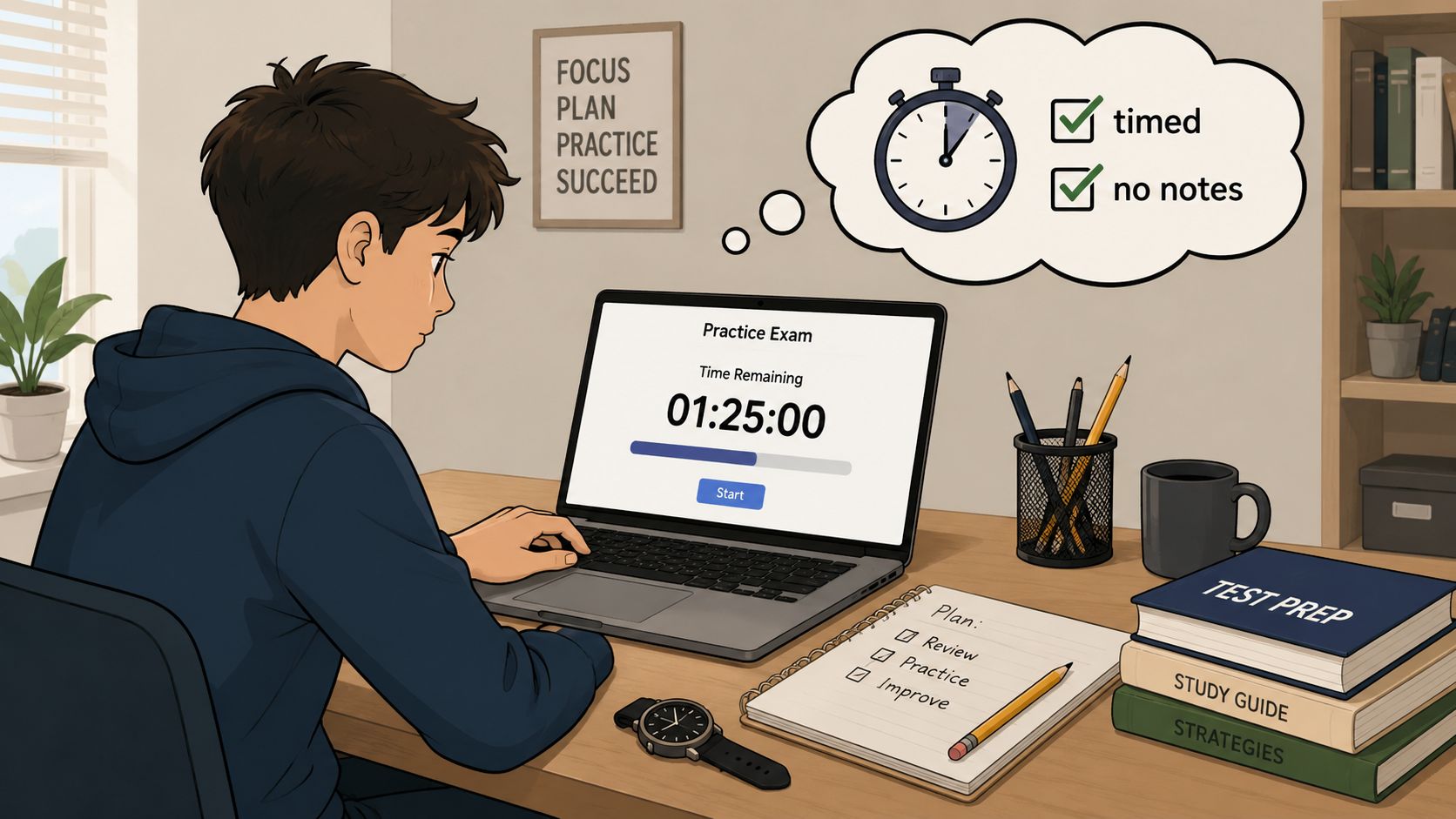
Build the test around the timer
Start with a full block of questions in one sitting. If the exam is timed, your practice should respect that limit. A common practice structure uses 40 multiple-choice questions in 90 minutes, which works out to about 2.25 minutes per question. The exact timing will not match every healthcare exam, but the lesson does, pacing matters.
Use the same conditions each time:
- Choose one sitting: Do not stretch the session across the day.
- Remove distractions: Silence alerts, close tabs, and keep the setup clean.
- Use exam-like pacing: Do not pause every few questions to study the answers.
- Keep the same mindset: Treat it like a real sitting, not a casual quiz.
That repetition has a practical effect. When you keep practicing under simulated pressure, the pressure becomes familiar. You are not removing nerves, but you are training your brain to work while they are present.
Use the right environment for the right habit
Environment matters more than many candidates expect. Web-based formats in medical education research often help learners repeat cases and study on their own schedule, which is part of why digital learning has remained effective for knowledge outcomes. That same logic supports online practice in certification prep, because the format can match the quality of in-person preparation without forcing you into a classroom schedule.
If caffeine or energy drinks are part of your routine, the article on cleaner focus for test preparation is a practical reminder that focus is usually built through conditions and consistency, not stimulation. That matters when you are trying to reproduce exam-day concentration instead of just staying awake.
The goal is simple. When the exam starts, it should feel familiar. It should feel like the last version of a routine you have already practiced.
Interpreting Your Results and Identifying Weak Areas
A score is only useful if you know what it means. A 78 on one bank can mean you're ready, while a 78 on another can mean you've learned to recognize patterns without fixing the underlying gaps. The difference is in how you read the misses.
Use the benchmark, then look past the benchmark
One EMS certification study found that candidates who completed all four 100-question practice tests had a 79% pass rate on the certification exam, which was 12 percentage points higher than the overall pass rate, and scoring ≥70% on the question bank was associated with a much higher likelihood of passing, with an odds ratio of 17.8 (EMS practice-test study). That makes 70% a meaningful readiness marker, not a guarantee, and not a reason to panic if you're not there yet.
Use that benchmark as a decision point:
- Below 70%: Rebuild weak content areas and retest.
- Around 70%: You're close, but the errors still matter.
- Above 70%: Shift more energy to timing, pattern recognition, and endurance.
The number alone doesn't tell the full story. What matters is whether your wrong answers cluster in one domain, whether you miss easy wording traps, or whether time pressure is pushing you into poor choices.
Turn each missed item into a diagnosis
Don't just mark a question wrong and move on. Categorize it. Was it a true knowledge gap, a timing error, or a reading mistake? That simple sorting step turns a score report into a study plan.
A useful review process looks like this:
- Identify the concept: What topic was the question testing?
- Name the trap: Why did the distractor look tempting?
- Write the fix: What do you need to review before the next set?
- Retest the same concept: Use a fresh item to confirm the correction.
Practical rule: If you can explain why the wrong answer was appealing, you've already made the question more useful.
Web-based learning often pays off. In one randomized trial of 210 internal medicine residents, web-based case discussions improved diagnostic-question performance more than bedside teaching, with the web group moving from 53.9% to 59.4% correct, while the bedside group changed only from 52.8% to 53.4%, and the between-group difference was statistically significant (P=0.02). The format didn't matter as much as the active engagement with cases and questions.
That's the true payoff of practice questions. They don't just measure you. They show you where to work next.
Practice Questions Across ACLS BLS PALS NRP and CPR Certifications
A nurse heading into ACLS, a respiratory therapist preparing for NRP, and a clinician renewing CPR do not need the same question set. Each exam rewards a different kind of judgment, and practice works best when it matches that demand instead of treating every certification as interchangeable.
What changes by certification
ACLS practice should train rapid pattern recognition, medication choices, and the next step in a resuscitation algorithm. The strongest questions do more than test recall. They force you to decide under pressure, which is closer to the exam and closer to real code performance.
PALS asks for the same discipline with a pediatric lens. You have to recognize how pediatric physiology changes the response, then choose the correct action without drifting into adult habits. A good set of PALS questions should mix straight content checks with scenario-based items that make you connect assessment findings to treatment.
For PALS Certification, ProMed's online format uses a self-paced review path that fits clinicians who do not control their schedules. That format matters because many candidates lose preparation time to shifts, call, and family obligations long before motivation becomes the problem.
BLS and CPR should feel direct, but never careless. These exams reward clean decisions, proper sequence, and the ability to stay accurate while moving quickly. NRP demands even tighter focus, since the sequence of newborn priorities can be missed if you overthink the details or rush past the first corrective step.
A useful ACLS practice test gives a clearer picture than a generic question bank because it mirrors the exam's decision points, not just the topic list. That difference matters across every certification here. A bank built for ACLS should pressure test algorithms, while one for PALS should probe pediatric reasoning, and one for NRP should force attention to timing and order.
Online practice matches the reality of modern certification prep
The format should fit the exam. Online practice is practical for healthcare professionals because it can be repeated, reviewed, and fit around clinical work without lowering the standard of the questions. A well-built online question bank can be as demanding as a paper packet or classroom review when it uses the same exam logic and the same level of scrutiny.
The test is whether the questions reflect the certification. ACLS learners need items that look like code decisions, PALS learners need pediatric scenarios, BLS and CPR learners need fast recognition of basic steps, and NRP learners need sequence-driven questions that reward careful attention. A bank that mixes those styles poorly wastes time, even if the interface looks polished.
The main mistake across all of them
The common failure is treating every question the same. A candidate who jumps from one random topic to another may feel busy, but that does not create readiness for ACLS, BLS, PALS, NRP, or CPR. Better preparation comes from matching the question style to the certification and using each miss to refine how you think, not just what you remember.
ProMed Certifications fits that approach because it focuses on online certification delivery, which matches how many clinicians now prepare. The advantage is not novelty. It is the ability to practice in the same format, with the same pressure, and with the same kind of decisions you will face on exam day.
Building a Study Plan That Integrates Practice Questions
A solid study plan does not start with a marathon test. It starts with a baseline. From there, practice questions steer review instead of turning into random busywork.
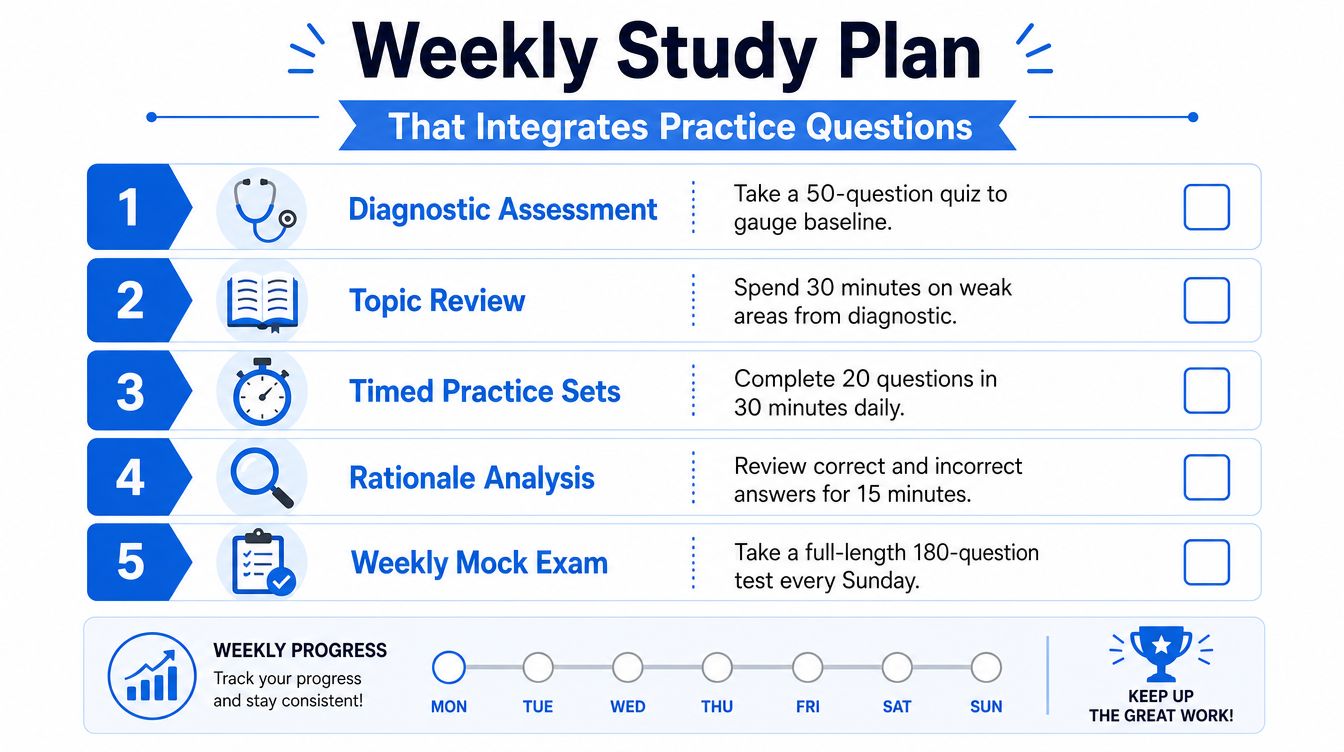
A weekly structure that actually fits clinical life
A simple plan works better than an elaborate one you cannot maintain. Start with a diagnostic quiz, use the results to target weak topics, and keep questions in the plan every week so they stay part of the routine instead of becoming a last-minute scramble.
A workable rhythm looks like this:
- Diagnostic assessment: Take an initial quiz to find your weak spots.
- Topic review: Spend focused time on the areas that missed the mark.
- Timed practice sets: Use short, repeated question blocks to keep recall active.
- Rationale analysis: Review every miss, especially the distractors.
- Weekly mock exam: Recheck endurance and pacing before exam day.
For busy clinicians, that structure is more sustainable than studying whenever there is time and hoping the pieces connect later. It also supports the kind of exam-first routine described in tips for passing ACLS, BLS, PALS, or CPR on the first attempt, which fits the way healthcare professionals prepare.
Keep the volume steady, then increase the pressure
Short daily practice usually beats occasional marathon sessions because it keeps retrieval active. The point is not to burn out early, it is to keep returning to the material often enough that recall becomes more reliable. When the exam date gets closer, shift toward longer timed sets and fuller simulations.
Practical rule: Build the habit first, then build the stamina.
For learners pursuing Neonatal Resuscitation Certification, ProMed's online format shows how certification prep can fit around a crowded schedule without weakening the standard. That convenience matters for healthcare professionals who need access without extra travel or rigid class times.
Consistency is what drives readiness. One diagnostic test, one review cycle, one timed set, and one mock exam at a time will do more for your readiness than scattered cramming ever will.
.avif)
Stay compliant with ProMed+
Certifications included: ACLS, BLS, PALS, CPR & Neonatal Resuscitation
Unlimited continuing education: over 200 hours of accredited CME
All-inclusive: One price. No surprises.
Get certified today

The Advanced Cardiac Life Support (ACLS) is an accredited online medical certification course that teaches medical professionals to respond to nearly all cardiopulmonary emergencies.

The Pediatric Advanced Life Support (PALS) Recertification instructs medical professionals on performing pediatric cardiopulmonary resuscitation in emergencies.

The Basic Life Support (BLS) Recertification is intended to teach healthcare professionals the basic steps of CPR and rescue breathing for adults, children, and infants.

Our online medical certification course for CPR, Automated External Defibrillator (AED), and First Aid is designed to teach adult, child, and infant CPR and AED use.

The Neonatal Resuscitation Certification trains medical professionals in performing resuscitation procedures and life-saving techniques for newborns at the time of delivery.

.png)
.png)
.png)