


Saving a Child's Life: The Pediatric Chain of Survival Explained
.png)
When a child is in crisis, every single second feels like an eternity. The Pediatric Chain of Survival is the critical framework—a life-saving blueprint—that turns chaos into a coordinated, effective response for both lay rescuers and seasoned healthcare providers.
A Blueprint Designed for Children
Unlike adults, who often suffer sudden cardiac events, children typically go into cardiac arrest because of a respiratory issue or shock. This isn't just a minor detail; it's a game-changing distinction that shapes the entire rescue effort.
That's why the pediatric chain is unique. It kicks off with a heavy emphasis on prevention, aiming to stop breathing problems and shock before they can ever escalate into a full-blown cardiac arrest. It's about getting ahead of the crisis, not just reacting to it.
Why Every Link Matters
Think of it like this: the chain is only as strong as its weakest link. Each step is designed to build on the one before it, creating a seamless bridge from the initial response all the way to long-term recovery. For any medical professional, mastering these links isn't just about passing a test—it's about being ready for one of the most high-stakes scenarios you'll ever face.
This guide will break down the six links, step-by-step, showing you how each one contributes to the ultimate goal of saving a child's life. Understanding this process gives you a clear path to follow when the pressure is on.
The core idea is simple: From prevention and early CPR to advanced hospital care and recovery, every action is indispensable. One weak link can jeopardize the entire rescue and drastically reduce a child’s chance of survival.
This framework is the bedrock of both Pediatric Advanced Life Support (PALS) and pediatric Basic Life Support (BLS) training. As we dive into each component, you’ll see how these guidelines translate into the practical, hands-on skills needed to protect the children in your care and community.
Exploring Each Link in the Chain of Survival
The pediatric chain of survival is a powerful, evidence-based sequence, but it's more than just a list of steps. Think of it as a domino effect—each link must be strong and perfectly aligned with the next to give a child the best possible shot at a good outcome.
Let's walk through this six-part framework, breaking down the specific actions that save lives, from preventing a crisis in the first place to supporting a child's long-term recovery.
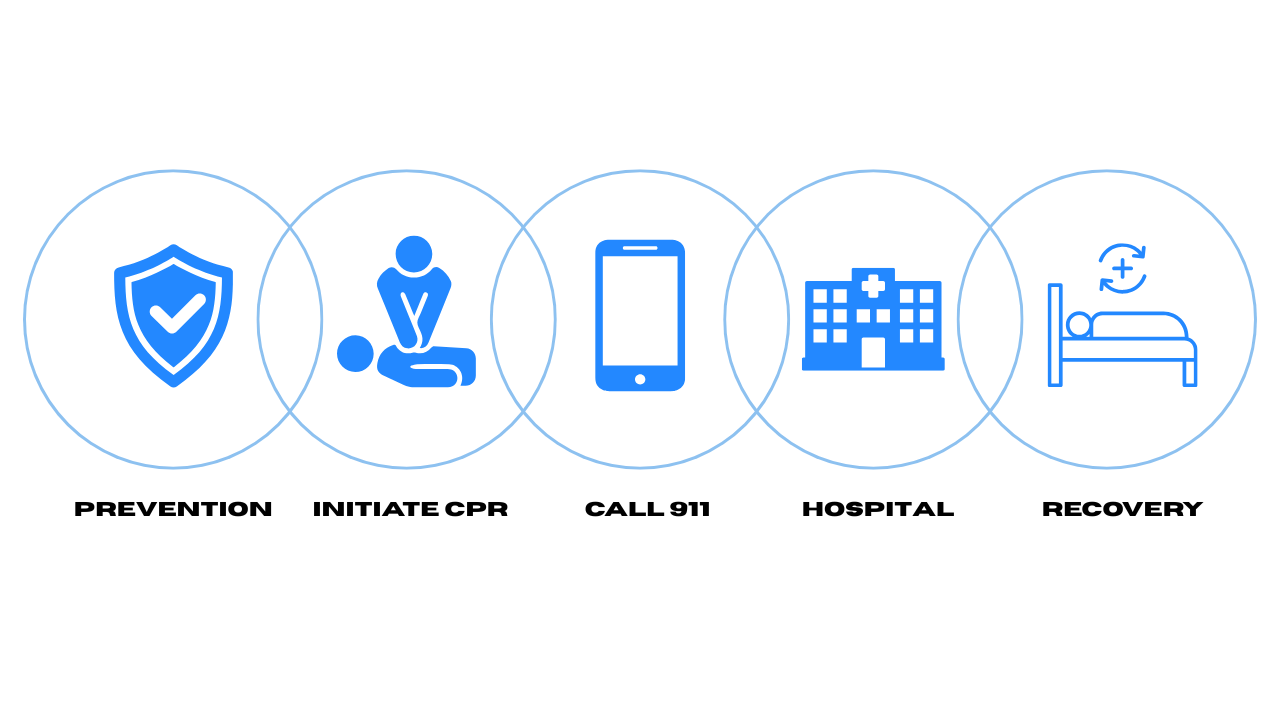
This visual roadmap shows that survival isn't just about the emergency itself. It's a comprehensive system of care that starts long before a 911 call and extends far beyond the hospital doors.
Link 1: Prevention
The first and most impactful link is Prevention. This is where the pediatric chain differs most dramatically from the adult version. While adults often suffer a sudden cardiac event, kids typically go into cardiac arrest for secondary reasons, like respiratory failure or shock.
This is actually good news. It means we often have a window of opportunity to intervene before the heart stops.
Prevention is a massive category. It includes everything from childproofing a home and correctly installing car seats to teaching water safety. For healthcare providers, it’s about sharp assessment skills—recognizing the subtle early signs of respiratory distress like nasal flaring, grunting, or retractions where the skin sucks in between the ribs. It's about managing conditions like asthma or severe infections before they spiral out of control.
Link 2: Early High-Quality CPR
When prevention fails and a child is unresponsive and not breathing normally, the clock starts ticking. Fast. This brings us to the second link: Early High-Quality CPR. The mission here is simple but absolutely vital: manually pump oxygenated blood to the brain and other organs to buy precious time until help arrives.
But "high-quality" CPR isn't just about pushing on the chest. The technique has to be tailored to the child’s size.
- Hand Placement: For infants (under 1), use two fingers in the center of the chest or the two-thumb-encircling-hands technique. For children, one or two hands on the lower half of the breastbone will do.
- Compression Depth: Go about 1.5 inches (4 cm) for infants and about 2 inches (5 cm) for children. A good rule of thumb for both is compressing about one-third the depth of the chest.
- Compression Rate: The beat is the same for everyone: 100 to 120 compressions per minute. If you need a mental metronome, think of the beat to "Stayin' Alive."
- Rescue Breaths: Because kids' arrests are so often linked to breathing problems, rescue breaths are non-negotiable. The cycle is 30 compressions followed by 2 breaths if you're a single rescuer.
This is where training and confidence are game-changers. Knowing the right moves eliminates hesitation, which can make all the difference.
Link 3: Activation of Emergency Medical Services (EMS)
The third link, Activation of EMS, is all about getting professional help on the way. But when you make that call can be a bit tricky in pediatric cases.
If you’re alone and you see a child suddenly collapse, the guideline is to call 911 immediately. The collapse might be a primary cardiac issue where an AED is needed ASAP.
But what if you find a child who is already unresponsive? If you're by yourself and didn't see it happen, the protocol shifts. The arrest was most likely caused by a breathing problem. The recommendation is to perform 2 minutes of CPR first, then call 911. This prioritizes getting that first, critical dose of oxygen to the brain.
Key Takeaway: If you witness a child suddenly collapse, call 911 first. If you find a child already unresponsive, start CPR for two minutes before calling 911 (if you are alone).
This subtle difference is based entirely on the unique physiology of pediatric emergencies, ensuring the most critical intervention happens first.
Link 4: Advanced Resuscitation
Once EMS rolls up, the fourth link—Advanced Resuscitation—kicks in. This is where the skills learned in Pediatric Advanced Life Support (PALS) take center stage. Paramedics and other healthcare pros take over from bystander CPR and start deploying more sophisticated tools.
This phase is all about diagnosing and treating the why behind the arrest while supporting the child's vital functions. Key actions include:
- Advanced Airway Management: Securing the airway with tools like an endotracheal tube for more effective ventilation.
- Pharmacology: Giving medications like epinephrine to jump-start the heart or correct dangerous arrhythmias.
- Rhythm Analysis: Using a monitor/defibrillator to see what the heart's electrical system is doing and delivering a shock if needed.
- Intravascular Access: Placing an IV or intraosseous (IO) line to get fluids and drugs into the bloodstream quickly.
This link is a powerful display of well-rehearsed teamwork and protocols. To get a closer look at these life-saving steps, you can review the official pediatric cardiac arrest algorithm that lays it all out.
Link 5: Post-Cardiac Arrest Care
Surviving the initial arrest is a huge victory, but the fight isn't over. The fifth link, Post-Cardiac Arrest Care, is a highly coordinated effort to protect the brain and organs from the secondary damage that can happen after blood flow is restored. This phase starts the second a child has a return of spontaneous circulation (ROSC) and continues in the pediatric intensive care unit (PICU).
The main goals are to stabilize organ function and minimize any neurological injury.
- Targeted Temperature Management (TTM): Carefully controlling the child's body temperature to lower the brain's metabolic needs and prevent further injury.
- Hemodynamic Support: Actively managing blood pressure and cardiac output with fluids and meds.
- Ventilatory Support: Fine-tuning oxygen and carbon dioxide levels with a ventilator to protect the lungs and brain.
- Neurological Monitoring: Keeping a close watch for seizures or other signs of brain injury.
The strength of this link has grown by leaps and bounds. In fact, one incredible study showed that survival from pediatric in-hospital cardiac arrest nearly tripled over a decade, jumping from 14.3% to 43.4% between 2000 and 2009. This huge improvement was largely thanks to better resuscitation and post-arrest care.
Link 6: Recovery
The final and newest link in the chain is Recovery. Its addition was a huge step forward, acknowledging that a "save" means more than just leaving the hospital. Recovery is a long-term journey for both the child and their family, addressing physical, cognitive, and emotional needs.
For the child, recovery might involve:
- Rehabilitation: Physical, occupational, and speech therapy to regain lost function.
- Neuropsychological Assessment: Evaluating cognitive skills to spot and support any learning or behavioral challenges.
- Medical Follow-up: Ongoing care for any long-term health issues.
For the family, it means emotional support, resources, and the education they need to navigate life after a traumatic event. This link completes the circle, making the pediatric chain of survival a truly comprehensive blueprint for not just saving a life, but restoring a future.
Pediatric vs Adult Chains of Survival: Key Differences
Responding to a child in crisis is a world away from helping an adult, and their respective Chains of Survival reflect this stark reality. While both frameworks are designed to save a life, knowing the differences isn't just an academic exercise—it's about avoiding critical mistakes when every second counts.
The biggest difference hits you right at the start: Prevention. The adult chain kicks in after a sudden, often unpredictable cardiac event like a heart attack. The pediatric chain, however, begins with the understanding that most cardiac arrests in children are preventable.
Simply put, kids’ hearts don't usually just stop on their own. Instead, their hearts stop because of a respiratory emergency or shock that wasn't caught and managed in time. This is exactly why the pediatric chain puts such a heavy emphasis on proactive safety and spotting the early signs of distress.
Why CPR Techniques Diverge
The "why" behind the arrest completely changes how we perform CPR. For adults, the immediate problem is circulation, so the focus is often on high-quality, compression-only CPR. Their blood is likely still oxygenated; the priority is just to pump it to the brain.
That's not the case for children. Since their crisis usually started with a breathing problem, their blood is dangerously low on oxygen by the time their heart gives out. This makes rescue breaths absolutely essential. A compression-to-ventilation ratio of 30:2 (for a single rescuer) is non-negotiable for re-oxygenating the blood while you circulate it.
Crucial Distinction: For adults, chest compressions are king. For children, rescue breaths are just as important as compressions because respiratory failure is the most common culprit.
The Timing of the 911 Call
Another key difference is when to call for help. The guidance changes based on whether you're alone and what you saw happen.
- For Adults (or a witnessed child collapse): Call 911 immediately. A witnessed collapse points to a sudden cardiac event where getting an AED is the top priority.
- For an Unwitnessed Child Collapse: If you're alone and find a child already unresponsive, the protocol is to perform two minutes of high-quality CPR before calling 911. The logic? The child most likely had a respiratory arrest, and your most critical first move is to get oxygen into their system right now.
To make these distinctions crystal clear, let's compare the two approaches side-by-side.
Pediatric vs. Adult Chain of Survival: A Head-to-Head Comparison
This table breaks down the fundamental differences in approach and rationale between the pediatric and adult resuscitation protocols.
AspectPediatric Chain of SurvivalAdult Chain of SurvivalPrimary Cause of ArrestUsually secondary to respiratory failure or shock (hypoxia).Typically a sudden cardiac event (e.g., heart attack).First LinkPrevention of injury and illness.Early Recognition and activation of EMS.CPR EmphasisCompressions and rescue breaths (30:2 or 15:2) are critical.Chest compressions are the priority; hands-only is an option.When to Call 911 (Solo Rescuer)After 2 minutes of CPR if the collapse was unwitnessed.Immediately upon finding the unresponsive person.AED UseImportant, but secondary to immediate CPR and oxygenation.Highest priority, especially for shockable rhythms like V-Fib.
As you can see, these aren't just minor tweaks. They represent a complete shift in strategy driven by the underlying physiology of children versus adults.
Outcomes and Statistical Realities
The data backs up these tailored approaches. A comprehensive analysis of pediatric cardiac arrest across 13 countries showed that the return of spontaneous circulation (ROSC) after an out-of-hospital arrest in kids ranged from 10% to 72%. Even more importantly, survival to hospital discharge was between 16% and 39%. For adults, these numbers are often lower, which underscores a powerful point: when the pediatric chain is followed correctly, the outcomes can be significantly better.
Mastering both the adult and pediatric chains requires distinct training and a solid understanding of these fundamental differences. Modern, accessible online courses are a fantastic way to gain this expertise, ensuring you're prepared for any scenario. This is why many healthcare institutions now recognize high-quality online certifications, moving past the outdated belief that only in-person training is valid. The focus is rightly shifting to skill retention and positive outcomes, an area where online learning has proven to be incredibly effective.
The Power of Bystander Action in Pediatric Emergencies
Before an ambulance ever arrives, the most important person in a child's emergency is often the one standing right there. The first, most time-sensitive links of the pediatric chain of survival—prevention, early CPR, and calling for help—rest entirely in the hands of parents, caregivers, and teachers.
When a child stops breathing, you are their lifeline. It's a proven fact, not just a hopeful statement: immediate action from a bystander can double or even triple a child's chance of survival. Your willingness to step in is what holds the entire chain together until professional help can take over.
.png)
Overcoming Hesitation with Confidence
One of the biggest hurdles for any bystander is the fear of causing more harm. It’s a completely understandable worry. But the reality is stark: performing CPR is always better than doing nothing. A child in cardiac arrest cannot get worse from receiving chest compressions and rescue breaths.
The key to pushing past that fear is confidence, and confidence comes from accessible, high-quality training. Modern online courses are built to give you that confidence, letting you learn and practice the steps at your own pace. It's also a significant shift from the outdated belief that only in-person AHA or Red Cross training is valid; the industry now widely recognizes that online certifications from accredited providers are just as effective.
The Stark Reality of Pediatric Emergencies
Sobering statistics really underscore just how critical bystander action is. In the U.S. alone, there are an estimated 15,000 to 23,000 cases of pediatric out-of-hospital cardiac arrest (OHCA) each year.
Historically, bystander CPR has been performed in only about 30% of these cases. This has contributed to survival rates that have hovered around a grim 10%.
These numbers reveal a massive opportunity. By empowering more people with the skills to act, we can directly improve those odds.
By connecting the knowledge of the chain to real-world action, you become the decisive first link that holds the entire rescue together. Your intervention is the bridge between a tragic outcome and a chance at life.
When you witness a child collapse, your immediate response is what matters most. Understanding the correct steps, like those detailed in the pediatric BLS algorithm for a single rescuer, provides a clear, life-saving roadmap. This knowledge transforms a moment of panic into one of empowered, decisive action, giving a child their best possible chance at a future.
Why Modern Training Is Key to Mastering Resuscitation
When it comes to mastering the pediatric chain of survival, just knowing the steps isn’t enough. It takes confidence, precision, and skills that are razor-sharp. This is where high-quality, modern online education comes in, completely dismantling the old myth that only in-person classes can get the job done.
Healthcare is constantly changing, and education has to keep up. A growing mountain of evidence from peer-reviewed studies and industry articles confirms what many of us have experienced firsthand: accredited online certification courses deliver knowledge and skills just as well as—and sometimes even better than—a traditional classroom.
The Shift Toward Flexible and Accessible Learning
The idea that you must have an in-person American Heart Association (AHA) or American Red Cross course to be recognized is simply outdated. From massive hospital networks to small local clinics, healthcare employers are embracing high-quality, accredited online certifications. It’s a practical response to the realities of being a medical professional today.
Let's be honest, online learning offers some serious advantages that a fixed classroom schedule just can't touch:
- Flexibility for Hectic Schedules: You can learn whenever it fits your life. Whether that’s after a grueling 12-hour shift or on a rare weekend off, you don't have to rearrange your life, find a babysitter, or take time away from work.
- Self-Paced Learning for Real Confidence: Online modules let you hit "replay" on the tricky stuff. If you need to go over pediatric CPR nuances or complex resuscitation algorithms a dozen times to feel truly confident, you can. No pressure.
- Cost and Time Efficiency: Think about it—no travel expenses, no high classroom fees, and no lost wages. Online certifications are simply a more efficient way to stay compliant and prepared.
Embracing Evidence-Based Education
The bottom line is this: the way the information is delivered matters far less than the quality of the curriculum and whether you can actually perform the skills. Accredited online providers ensure their courses are built on the same rigorous, evidence-based standards that healthcare organizations demand. It's the outcome—your ability to save a life—that truly counts.
Online education isn't a shortcut; it's a smarter, more adaptable way to master life-saving skills. It empowers more professionals to gain and maintain the critical knowledge needed to strengthen every link in the pediatric chain of survival.
Additionally, pursuing specialty certifications helps healthcare providers elevate their expertise, giving them the advanced skills needed to navigate complex resuscitations and improve patient outcomes.
This forward-thinking approach makes sure more professionals can get the training they need, right when they need it. It’s about making top-tier education more accessible, not less rigorous.
At ProMed Certifications, we're at the forefront of this change, delivering convenience and credibility. Our accredited courses, like our comprehensive PALS certification program, are designed to give you the flexibility you need with the credibility your career demands. We believe in empowering you with the knowledge to act decisively in a pediatric emergency, ensuring you’re always ready to make a difference.
Common Questions About the Pediatric Chain of Survival
Knowing the pediatric chain of survival is one thing. Actually using it when the pressure is on is something else entirely. Let's walk through some of the most common questions that come up for both healthcare providers and lay rescuers.
How Often Should I Renew My PALS or Pediatric BLS Certification?
The standard across the board is to renew your Pediatric Advanced Life Support (PALS) or pediatric Basic Life Support (BLS) certification every two years. This isn't just an arbitrary rule to keep you busy; it's a vital rhythm for keeping your skills sharp and staying on top of the latest evidence-based guidelines.
Think about it—medical science doesn't stand still, and neither should your training. Regular renewal makes sure your knowledge and muscle memory are ready to go when you need them most. The old idea that you had to sit in a classroom with the AHA or Red Cross is quickly becoming a thing of the past. Modern, accredited online courses offer a flexible and equally effective path for busy professionals to stay confident and compliant. More and more healthcare systems are embracing high-quality online platforms, marking a real shift in how we approach continuing education.
What Is the Most Common Cause of Pediatric Cardiac Arrest?
This is a huge difference between kids and adults. While adults often go into cardiac arrest because of a primary heart problem (like a heart attack), for children, it's almost always a secondary event. The most common trigger is respiratory failure or shock.
A child’s heart is usually healthy. It stops working because it's been starved of oxygen for too long. Common scenarios that lead to this include:
- Choking or a blocked airway
- Drowning
- A severe asthma attack
- Sudden Infant Death Syndrome (SIDS)
- Overwhelming infections or sepsis
This is exactly why Prevention is the first and most important link in the pediatric chain. If you can spot and manage breathing problems early, you can often stop a cardiac arrest before it ever begins.
Can I Use a Standard AED on a Child?
Yes, absolutely. If a standard Automated External Defibrillator (AED) is all you have, use it without hesitation. While pediatric-specific pads are ideal because they deliver a lower dose of energy, using a standard AED is infinitely better than not using one at all.
The key when using adult pads on a small child or infant is to make sure the pads don’t touch. The best way to do this is to place one pad on the center of the child’s chest and the other on the center of their back. This front-and-back placement ensures the electrical current travels through the heart correctly instead of "arcing" between the pads on the surface. Don't worry—the AED is smart enough to analyze the heart rhythm and will only deliver a shock if it's medically necessary.
At ProMed Certifications, we’re leading this shift in education, offering accredited, convenient online certifications that work with your life. Our courses are built to give you the confidence and skills to master every single link in the pediatric chain of survival. Check out our nationally accepted certification courses and be ready to save a life.
.avif)
Stay compliant with ProMed+
Certifications included: ACLS, BLS, PALS, CPR & Neonatal Resuscitation
Unlimited continuing education: over 200 hours of accredited CME
All-inclusive: One price. No surprises.
Get certified today

The Advanced Cardiac Life Support (ACLS) is an accredited online medical certification course that teaches medical professionals to respond to nearly all cardiopulmonary emergencies.

The Pediatric Advanced Life Support (PALS) Recertification instructs medical professionals on performing pediatric cardiopulmonary resuscitation in emergencies.

The Basic Life Support (BLS) Recertification is intended to teach healthcare professionals the basic steps of CPR and rescue breathing for adults, children, and infants.

Our online medical certification course for CPR, Automated External Defibrillator (AED), and First Aid is designed to teach adult, child, and infant CPR and AED use.

The Neonatal Resuscitation Certification trains medical professionals in performing resuscitation procedures and life-saving techniques for newborns at the time of delivery.

.png)
.png)
.png)