
ProMed+
Unlimited certifications + CE, from $14/moAll certs + CE from $14/mo
Interactive guide · 10 min read
The fear of cracking a rib stops people from helping. Here's what really happens inside the chest, how often it happens, and why you should keep pushing.
The short answer
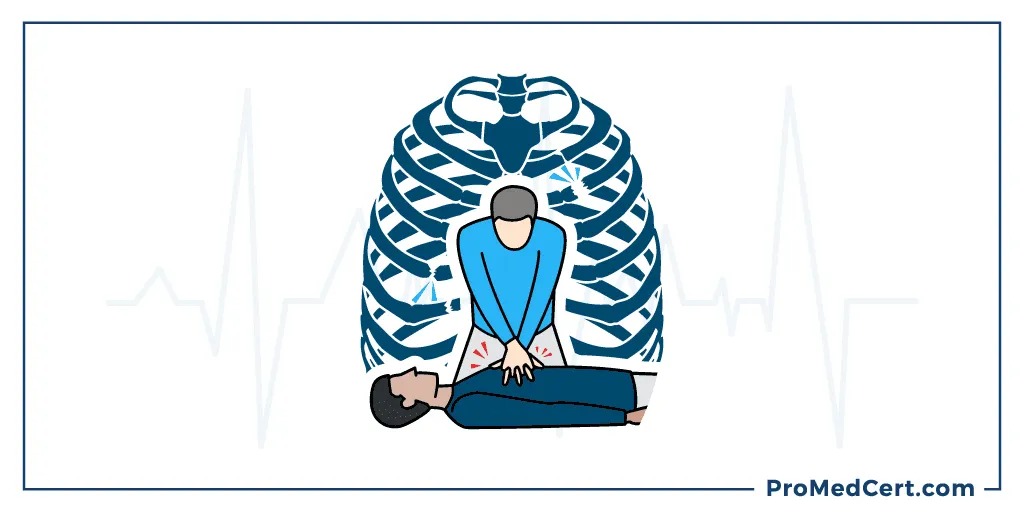
Yes, it's common.
Most CPR patients in autopsy studies had chest bone injuries.
It's survivable.
Ribs heal. A brain without blood flow doesn't.
Keep pushing.
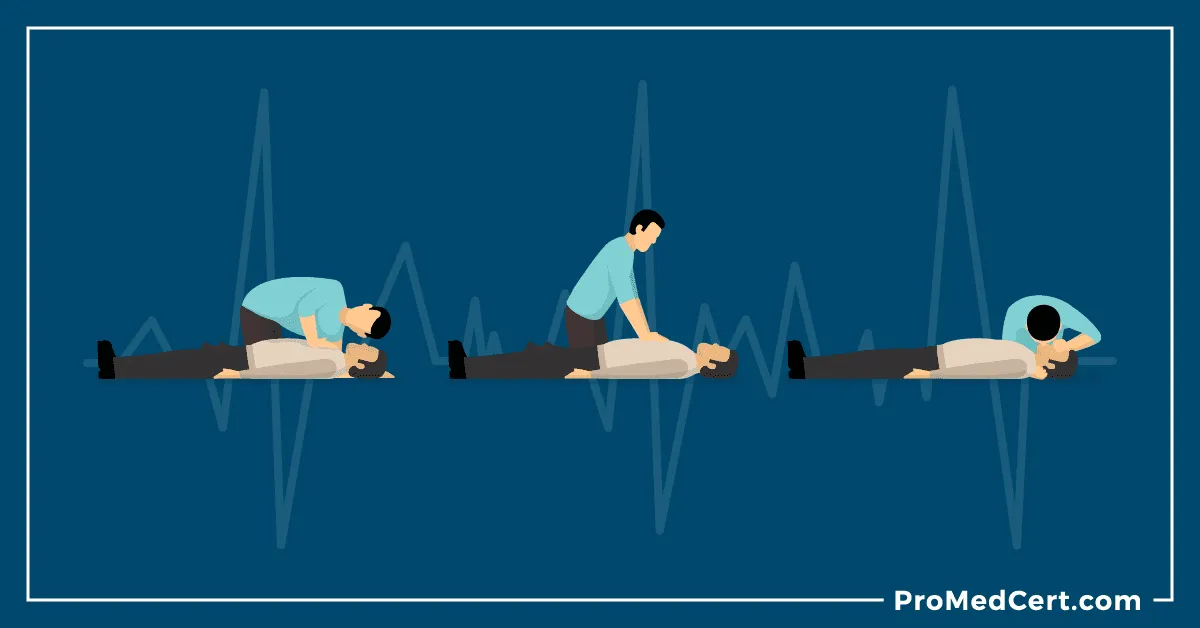
About 2 inches deep, 100–120 a minute, don't stop.
The anatomy
Tap a part of the chest to see what it does during compressions and why it can give way.
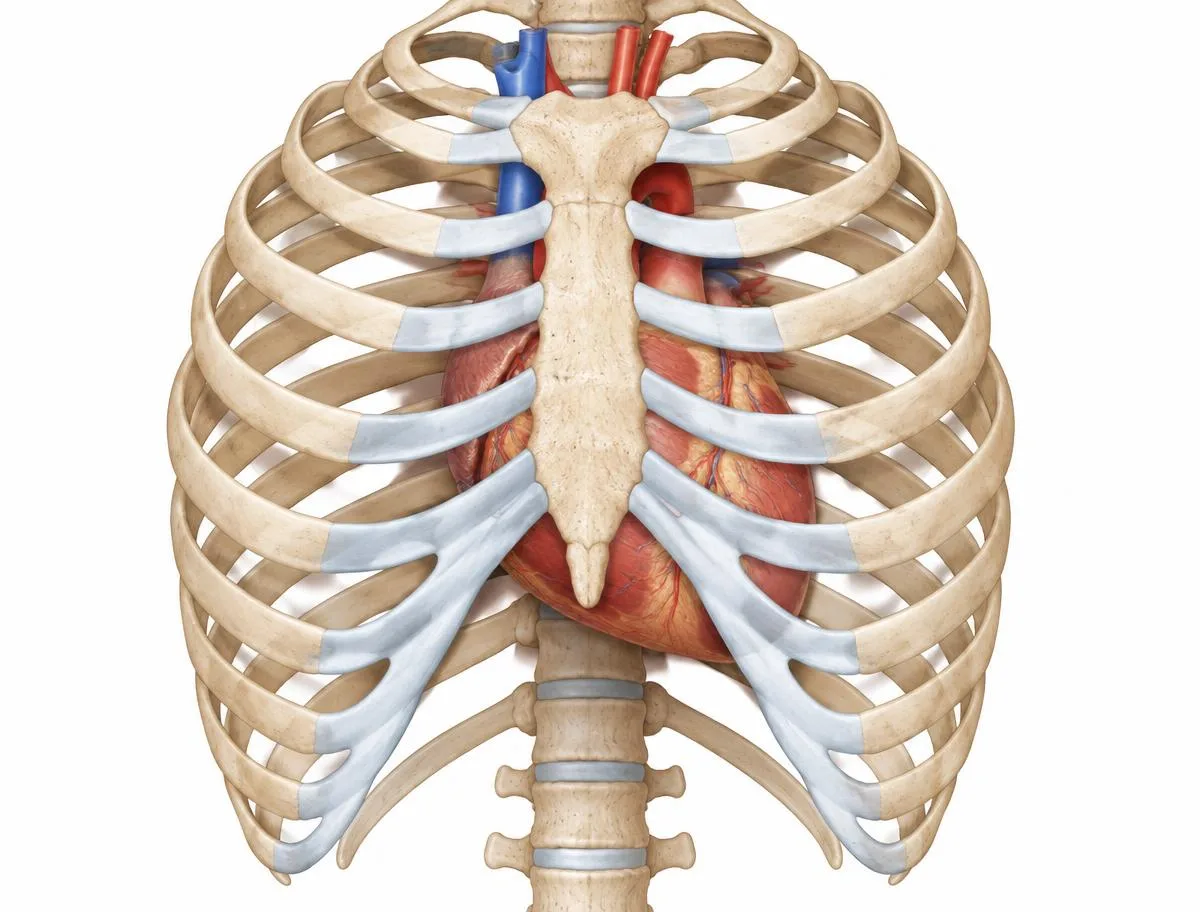
Hand spot
Heel of one hand on the lower half of the breastbone, other hand on top, roughly between the nipples. This spot sits right over the heart and lets the breastbone act like a press.
The physics
Adult compressions need to push the chest down about 2 inches, which takes up to about 60 pounds of force, 100 to 120 times a minute. Drag the slider to feel the trade-off.
On target
Blood flow to the brain
Enough squeeze to move blood. Cracked ribs are possible here, and that's an acceptable trade.
The numbers
The old rule of thumb was about 30% of patients. A 2015 study in Resuscitation reviewed autopsies of more than 2,000 people who got CPR for non-trauma cardiac arrest and found far more.
~0%
Chance of surviving cardiac arrest for long without blood flow. Brain damage starts within minutes.
2–3×
The AHA says immediate bystander CPR can double or triple the chance of survival. A cracked rib is the price of that chance.
Risk checker
Women, older adults, people with osteoporosis and smaller frames are more likely to break bones. Larger patients are less likely. One Korean study found bystander CPR caused more injuries than CPR from trained professionals.
Age
Sex
Bone health
Body size
Rescuer
Fracture likelihood
Higher
Fractures are very likely. That's expected; keep compressing at full depth.
Your technique stays the same either way.
In the moment
You feel or hear a pop
Usually a rib or cartilage giving way. It's startling, and it's normal.
Don't stop
Every pause drops blood flow to the brain, and it takes several compressions to build it back up.
Check your hands
Make sure the heel of your hand is still centered on the lower breastbone, not drifting to the side or onto the tip.
Keep depth and rate
About 2 inches deep, 100 to 120 per minute, full recoil between pushes. Don't go softer.
Tell the paramedics
When help arrives, mention you felt a crack. They expect it and will check later.
Want the full technique? Read Chest Compressions 101.
Myths vs facts
Legal protection
Every U.S. state
has a Good Samaritan law protecting people who give emergency help.
Good faith
is the key: you helped voluntarily, without expecting payment, and acted reasonably.
Rules vary
by state, especially for on-duty professionals. Your training is your best protection.
General information, not legal advice.
After the rescue
In the hospital
Doctors check for chest injuries with imaging after resuscitation. CPR fractures are expected findings.
First weeks
Pain control and breathing exercises help prevent lung problems while ribs start to knit.
About 6 weeks
Most simple rib fractures heal on their own in roughly six weeks.
Long term
Survivors rarely blame the rescuer. Many seek them out to say thank you.
Check yourself
1. You hear a crack during compressions. What do you do?
2. How deep should adult compressions be?
3. Where do your hands go?
4. Which patient is at higher risk of fractures?
5. What protects bystanders who help in good faith?
FAQ
No, but it's common. In a 2015 study of more than 2,000 autopsies, 77% of men and 85% of women who got CPR had rib fractures.
No. Keep going at the same depth and rate, and make sure your hands are still on the lower half of the breastbone.
Good Samaritan laws in every U.S. state protect people who give emergency help in good faith. Details vary by state.
Bones get thinner and stiffer with age, especially with osteoporosis, so they bend less and break sooner under the same force.
Most simple rib fractures heal in about six weeks with rest and pain control.
Keep hands centered on the lower breastbone, don't push deeper than 2.4 inches, and let the chest fully recoil. Training on a manikin builds the right feel.
Knowing the technique is what keeps you pushing when it matters. Get certified online in about an hour.
For everyone
Non-clinical staff, caregivers, teachers, coaches and the general public.
From $35
Get CPR certifiedHealthcare workers
All healthcare workers and students who need core CPR and AED skills for clinical work.
From $65
See BLSNot ready yet? Take the free CPR practice test.
This guide is for education and certification prep. It isn't a substitute for professional training or medical advice.