

Toxins and Overdose: What ACLS Providers Need to Know
This article is a study aid. Always follow the current American Heart Association guidelines, your official course materials and your facility's protocols.
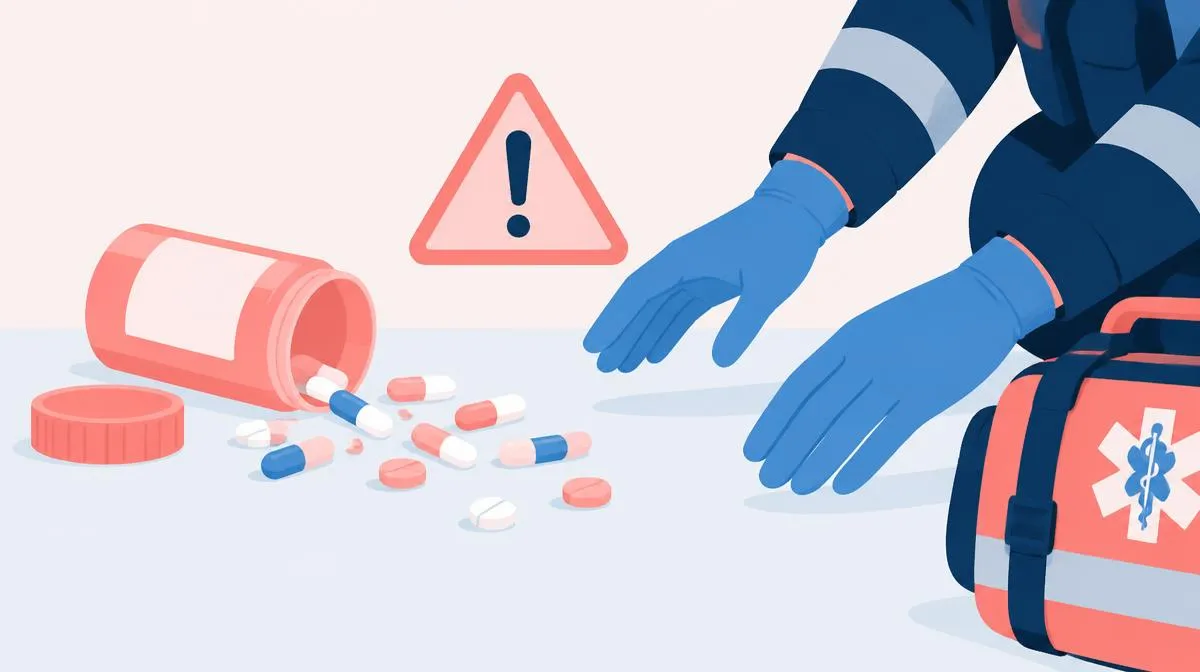
Poisoning and drug overdose are common causes of cardiac arrest and dangerous heart rhythms, especially in younger patients. In ACLS, toxins are one of the reversible causes you are taught to look for, listed among the "H's and T's."
Toxins in the H's and T's
During any cardiac arrest, the team should think through the possible reversible causes:
- H's: hypovolemia, hypoxia, hydrogen ion (acidosis), hypo- or hyperkalemia, hypothermia
- T's: tension pneumothorax, tamponade (cardiac), toxins, thrombosis (pulmonary), thrombosis (coronary)
Finding and treating the cause is often what turns a code around. Clues that point to toxins include a known history of drug use or medication access, pill bottles at the scene, unusual pupils, and a young patient with no other obvious cause.
Start with the basics
No matter what the patient took, care starts the same way:
- Make sure the scene is safe and wear protective equipment.
- Support the airway and breathing.
- If there is no pulse, start high-quality CPR and follow the standard cardiac arrest algorithm.
- Contact your regional Poison Control Center (1-800-222-1222 in the United States) or a medical toxicologist early.
Some poisoned patients need much longer resuscitation than usual, because the drug may wear off while CPR keeps blood flowing.
Opioid emergencies
Opioid overdose mainly causes slowed or stopped breathing, which then leads to cardiac arrest.
- Breathing but not responding: support ventilation and give naloxone.
- Not breathing normally but has a pulse: give rescue breaths or bag-mask ventilation and give naloxone.
- No pulse: start CPR immediately. CPR comes first. Naloxone may be given but should not delay CPR or defibrillation.
Naloxone can wear off before the opioid does, so patients need to be watched closely after they wake up.
Common antidotes and treatments
| Toxin | Key problem | Treatment to consider |
|---|---|---|
| Opioids | Stopped breathing | Ventilation, naloxone |
| Beta blockers | Slow heart rate, low blood pressure | Glucagon, high-dose insulin, vasopressors |
| Calcium channel blockers | Slow heart rate, low blood pressure | Calcium, high-dose insulin, vasopressors |
| Tricyclic antidepressants | Wide QRS, arrhythmias | Sodium bicarbonate |
| Local anesthetics | Seizures, arrest | Lipid emulsion therapy |
| Digoxin | Arrhythmias | Digoxin-specific antibody fragments |
| Cyanide | Cells cannot use oxygen | Hydroxocobalamin |
| Carbon monoxide | Low oxygen delivery | High-flow oxygen, possible hyperbaric therapy |
Antidote doses vary and should be guided by your protocols and Poison Control. For the ACLS exam, focus on recognizing which antidote matches which toxin.
Rhythms to watch for
- Slow heart rate from beta blockers, calcium channel blockers or digoxin. Use the Bradycardia Algorithm and treat the toxin.
- Wide-complex tachycardia from tricyclic antidepressants or other sodium-channel blockers.
- Torsades de pointes from drugs that prolong the QT interval, often treated with magnesium.
Key takeaways
- Toxins are one of the reversible causes of cardiac arrest. Always consider them.
- Basic life support, including CPR and ventilation, always comes first.
- Naloxone helps opioid overdoses but never replaces CPR in a patient without a pulse.
- Call Poison Control early. They are a valuable part of the team.
Ready to certify?
Brush up with our free ACLS practice test and ACLS algorithms, then earn or renew your card online with ProMedCert ACLS Certification.